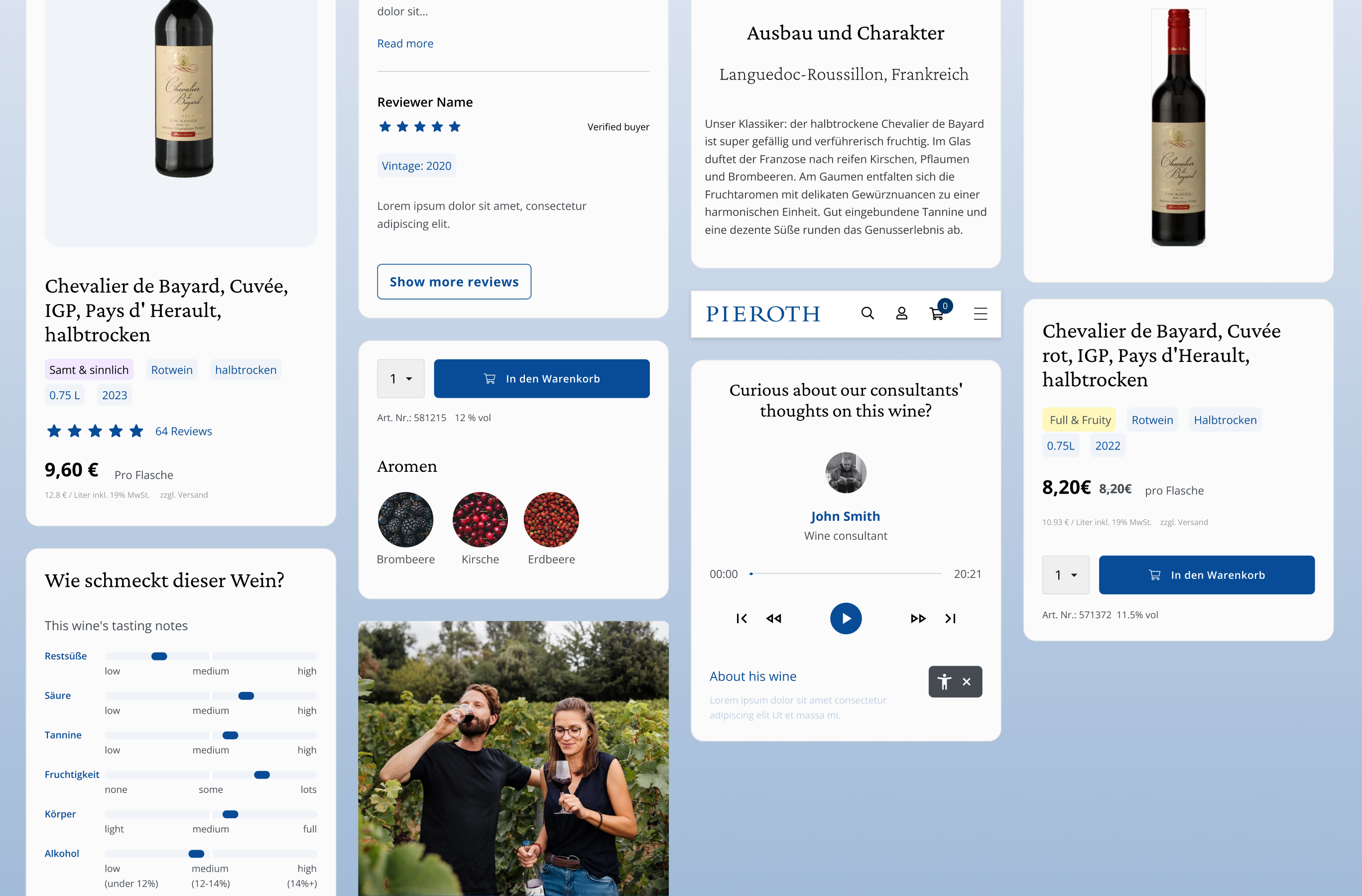
Weingraf App · Digital wine tasting with Shopify integration
How we built a digital tasting platform for wine profiles, recommendations and shared tasting sessions
Weingraf App · Digital wine tasting with Shopify integration
Weingraf wanted to make the world of wine easier to access, more personal and more digital. The idea was to connect real wine tasting packages with a guided app experience: users activate a package with a code, taste and rate each wine step by step, and receive a personal taste profile with matching recommendations at the end.
Especial built a mobile-first tasting platform with a web app, an iOS app shell, real-time group tasting functionality and a deep Shopify integration. Product data, wine metafields, customer profiles, progress, results and group sessions are processed through Shopify APIs, while Socket.IO powers live shared tasting experiences.

Weingraf GmbH / Pieroth Wein GmbH
3 Months
The Weingraf App had to be much more than a simple product or content app. It needed to guide a real wine tasting, make wine knowledge approachable, capture sensory ratings in a structured way and turn those ratings into personal recommendations. At the same time, the experience had to work for users who may not know much wine terminology, but still want to understand which wines actually fit their taste.
Several technical requirements came together in one product: package codes had to connect physical tasting sets with digital sessions, rating data had to be stored over time, group tastings had to stay synchronized in real time, and Shopify had to act as the central commerce and data foundation. The goal was an app that feels simple and playful for users, while product data, taste profiles, customer information, live sessions and native app features work together in the background.
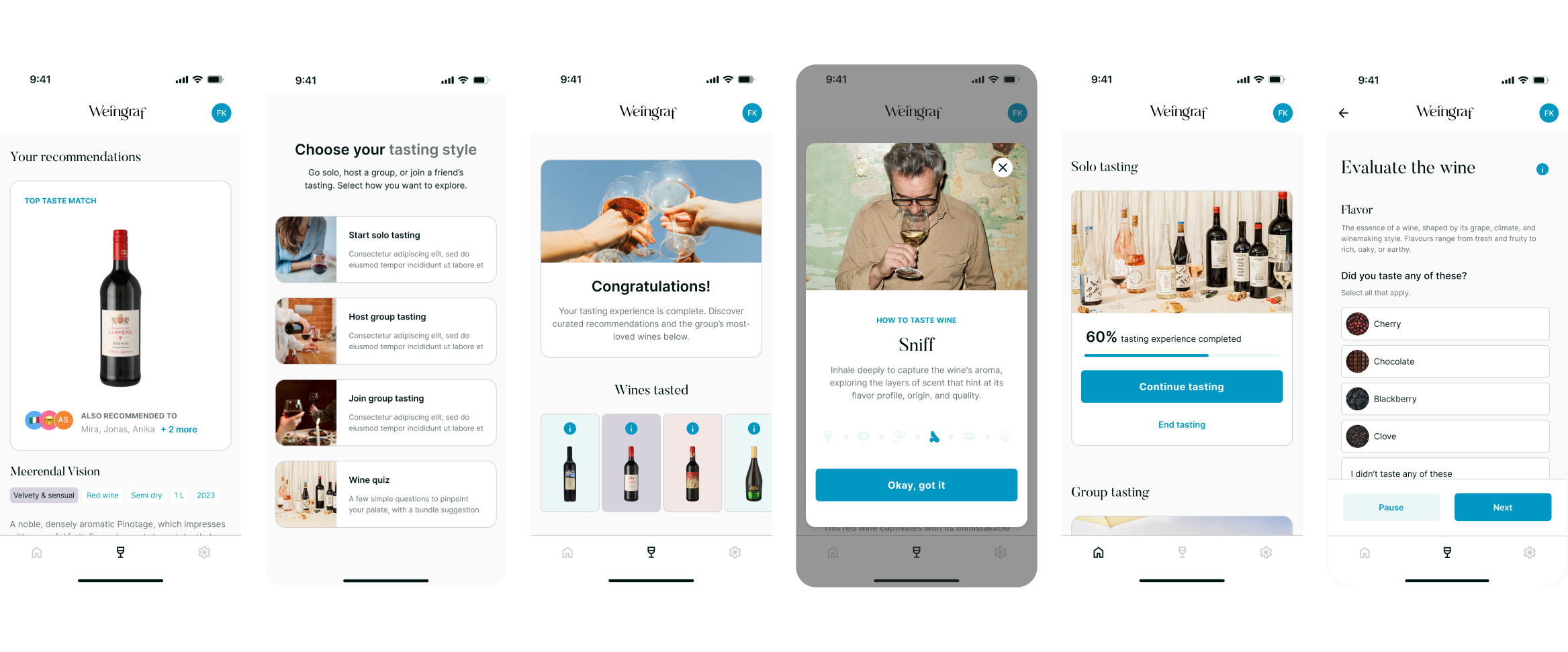
We developed the app as a mobile-first product centered around the tasting journey. The experience starts with a package code, then guides users through each wine and each tasting step. The structure of a professional wine tasting remains intact, but it is translated into an accessible and intuitive product experience.
The technical architecture was designed around Shopify as the source for product data, metafields, customer profiles, tasting progress and results. For group tastings, we added a Socket.IO real-time server that synchronizes participant status, host control, ratings and progress. An Expo app shell embeds the web app into a native iOS experience and adds functions such as push notifications, deep links, navigation and other device features.We started with a structured concept and UX phase to align all stakeholders around the final feature set. The goal was to reduce project risk early, clarify the most important user journeys and create a shared understanding of how the app should work before development started.
0
1
2
3
4
5
6
7
8
9
0
1
2
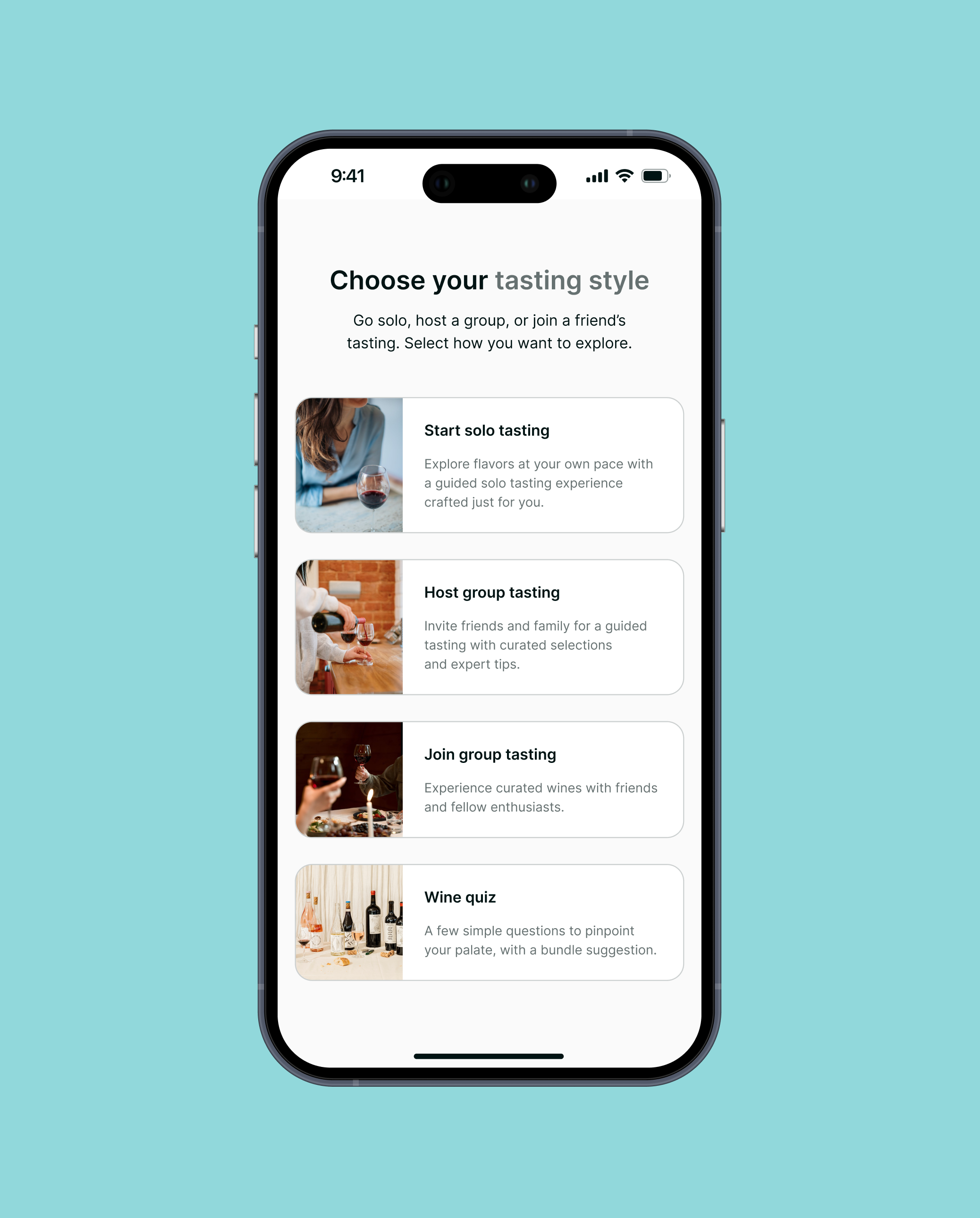
Tasting modes for
solo tasting and group tasting
1
2
2
3
4
5
6
7
8
9
0
1
2
Platforms for
iOS app and web app
1
2
2
3
4
5
6
7
8
9
0
1
2
Package-code journey
from tasting package to digital session
Host control, status and ratings in real time
products, wine metafields, customer profiles and sessions
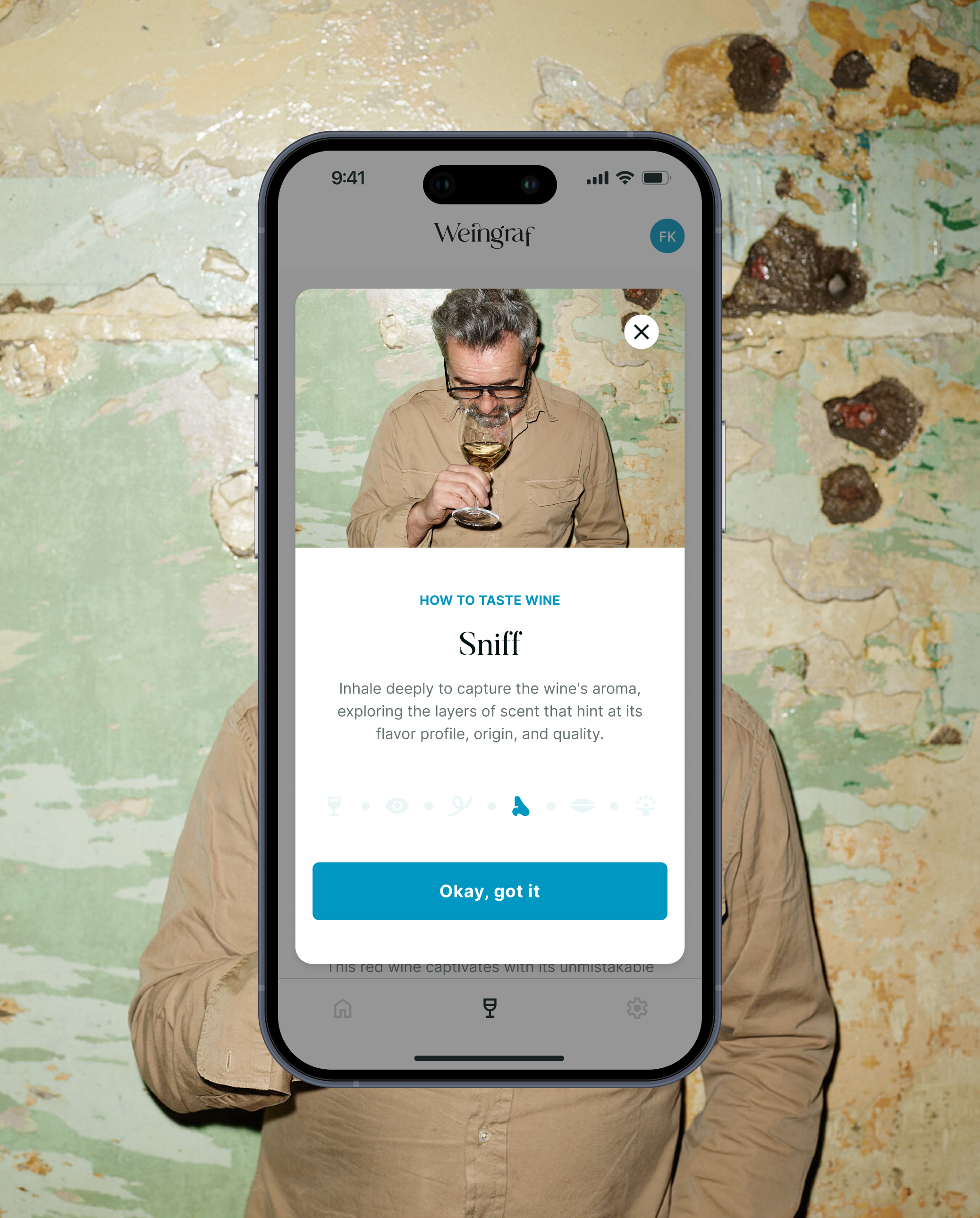
The central product question was clear: how can a professional wine tasting be guided digitally in a way that remains simple for beginners, but still meaningful for users who want to understand their preferences in more detail? The app therefore does not only guide users through products. It guides them through a tasting logic that includes looking, smelling, swirling, tasting and enjoying.
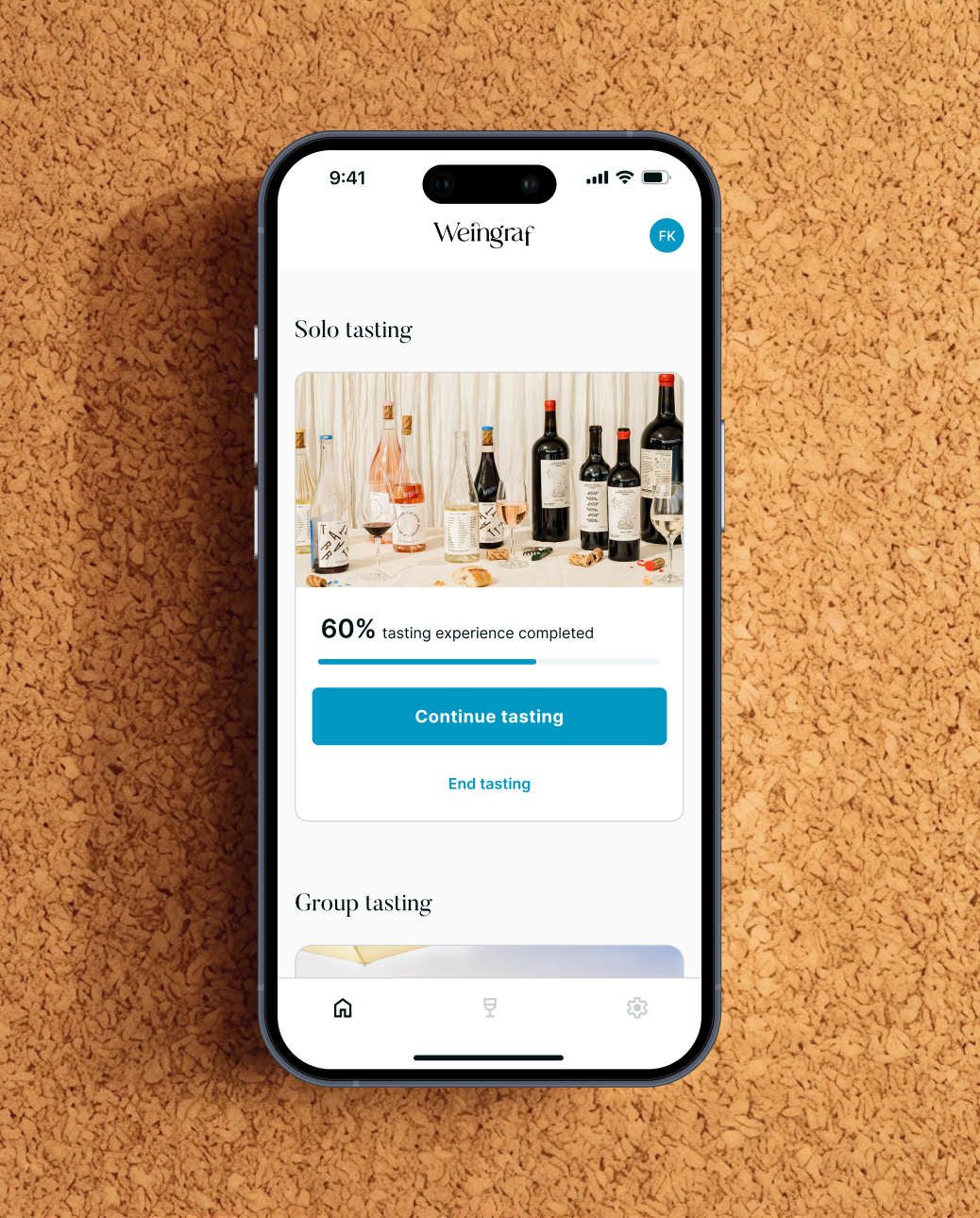
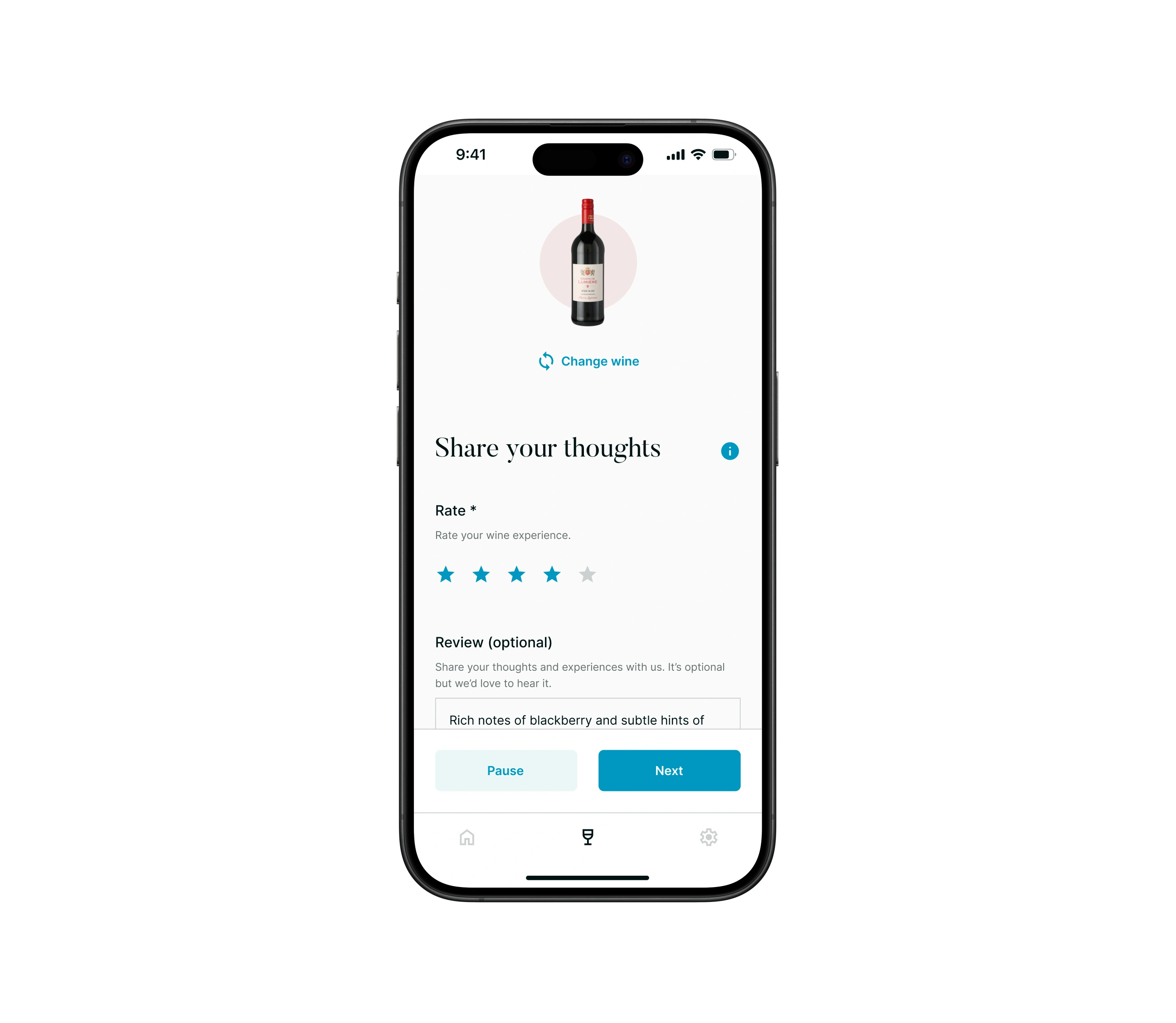
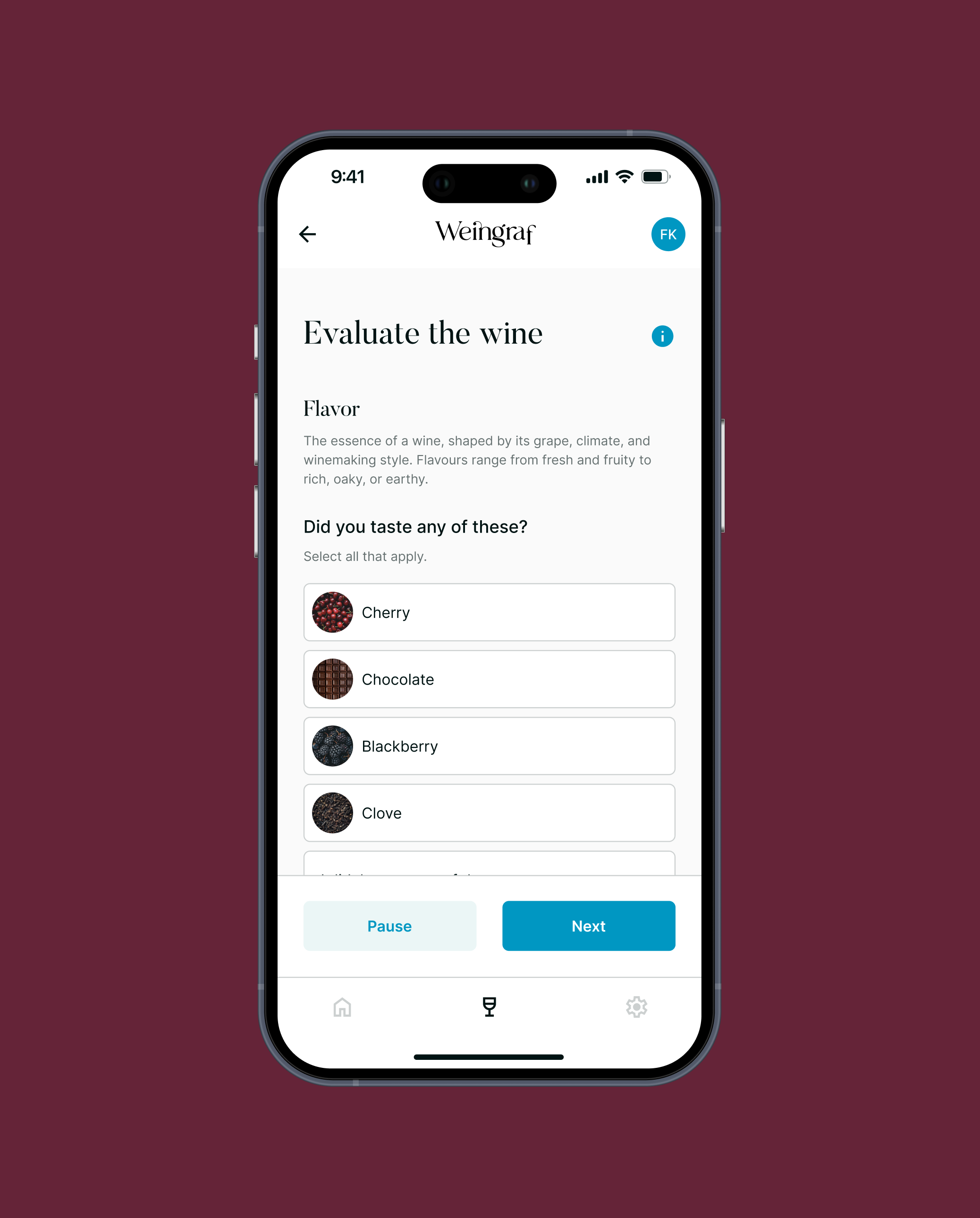
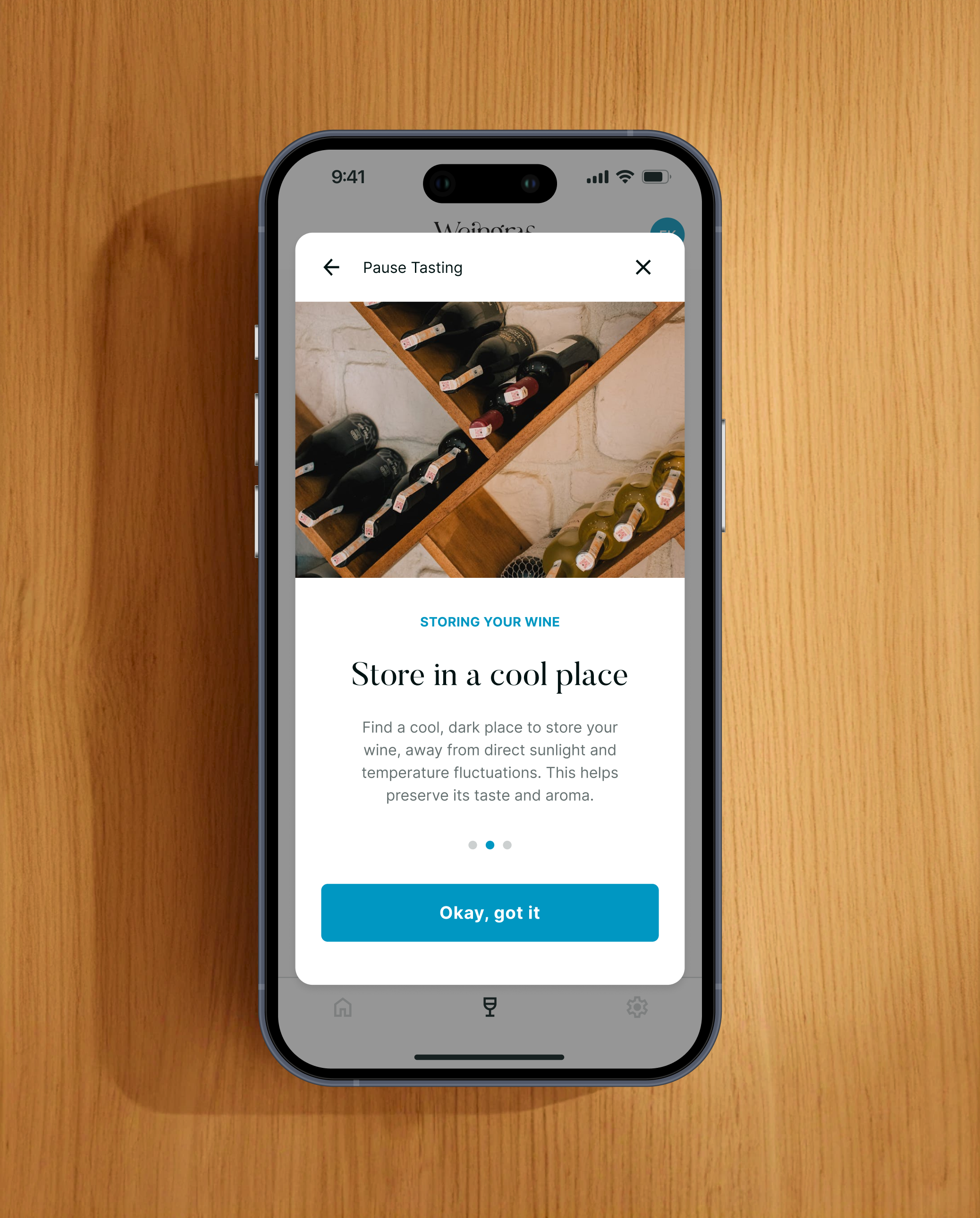
Ratings for aromas, residual sweetness, acidity, tannins, star scores and personal notes are captured step by step. Progress is saved, so users can pause a tasting and continue later. The result is an experience that connects wine knowledge, product data and personal preferences without feeling like a complex questionnaire.
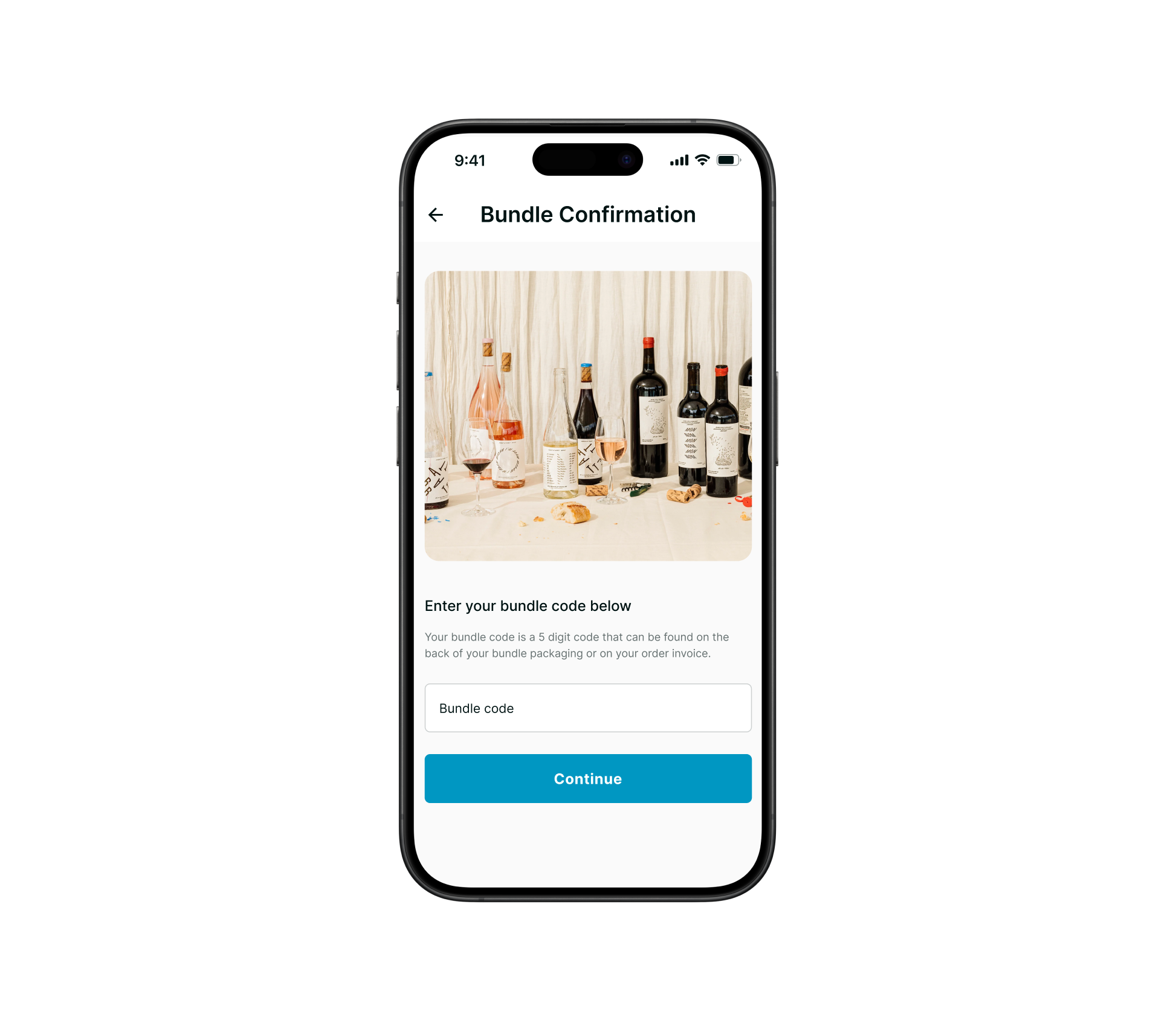
Each wine package is connected to the app through a package code. This starts the digital tasting with the right wines, product information, grape varieties, countries of origin, regions, wine types and aroma profiles. Users get a clear entry point, while Weingraf gets a clean connection between commerce, the package and the app experience.
The app translates the logic of a professional wine tasting into simple interactions. Users rate detected aromas, residual sweetness, acidity and, for red wines, tannins. They can also add star ratings and personal notes. This creates a structured picture of each user's taste preferences.
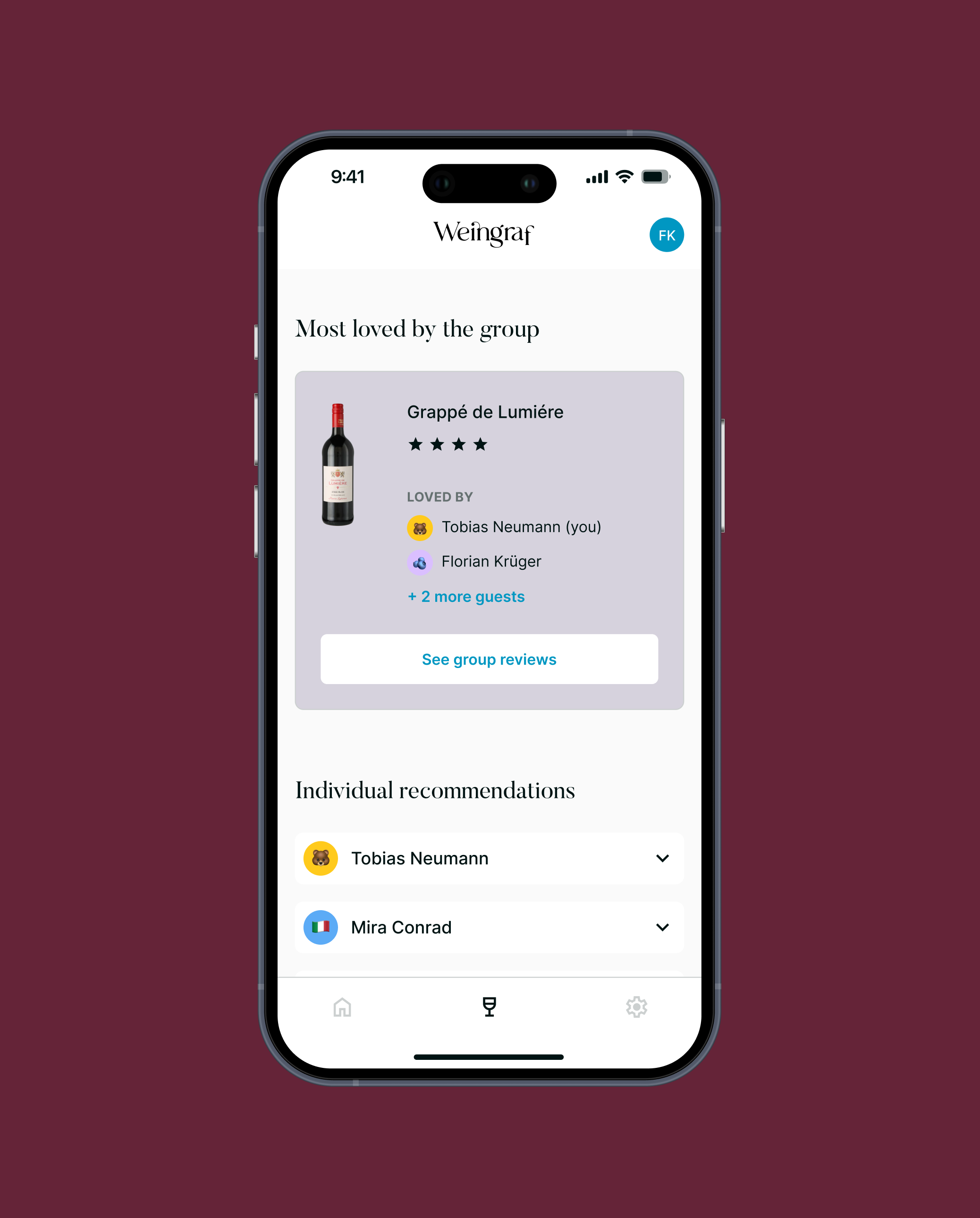
After the tasting, the app calculates a personal taste profile. It shows preferred aromas, less suitable flavor directions, sensory preferences and matching wine profiles. Based on this, individual recommendations for white, rose and red wines can be shown.

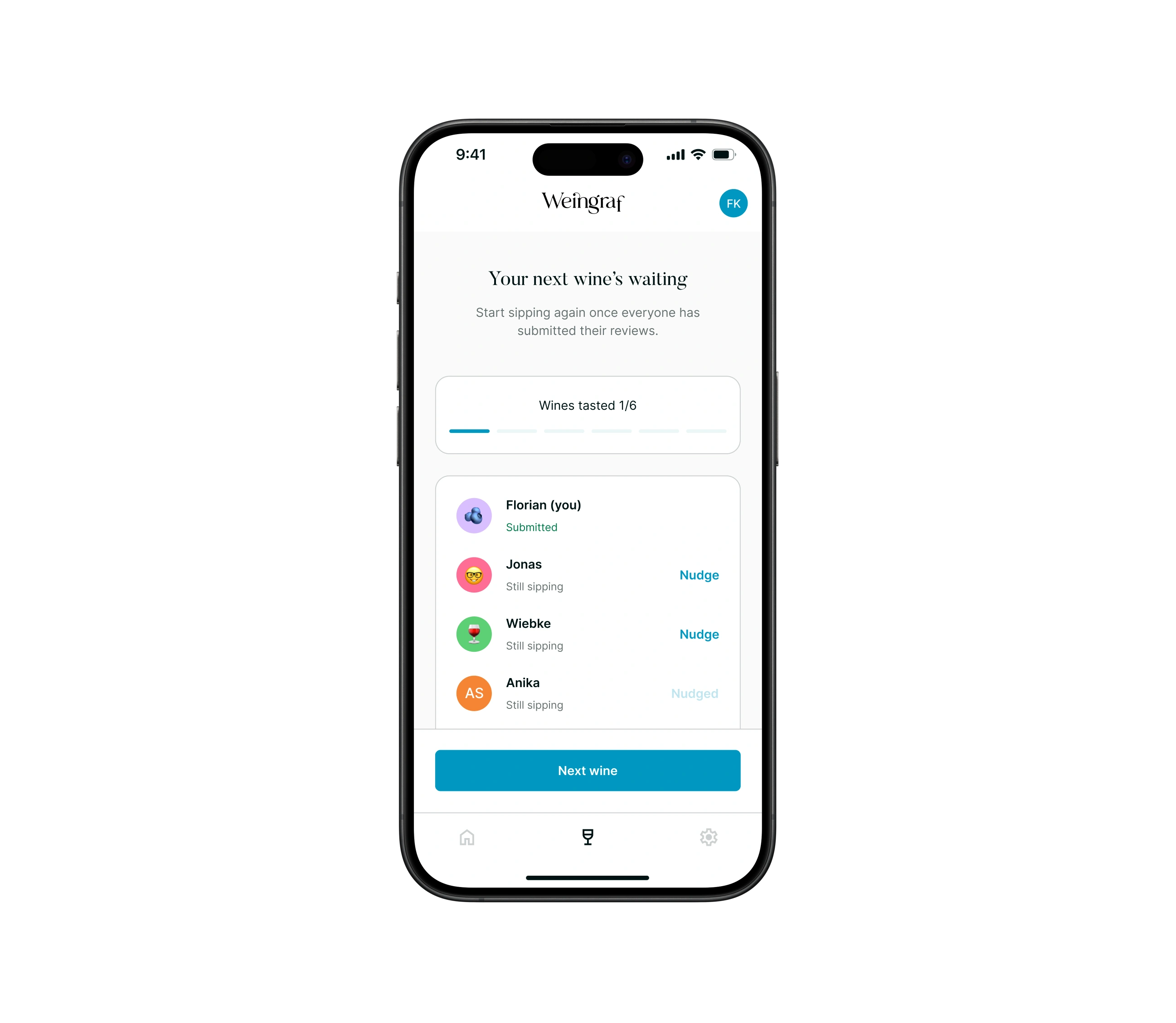
A host can create a group session, share a code and invite participants in real time. Names, avatars, progress, ratings and status are synchronized live. The host controls the tasting flow, while the app calculates both individual and shared group results.
The app guides users through the full tasting journey, from activating the package to receiving the final profile. For each wine, it displays relevant information such as grape variety, country of origin, region, wine type and matching aroma profiles. The tasting is not only documented, it becomes a guided learning and enjoyment experience.
This matters because Weingraf is not only selling wine. The brand helps customers understand their own taste. The app makes this advisory approach scalable: recommendations are not only derived from broad product categories, but from the actual ratings and preferences of the user.
One of the key features is group tasting. A host creates a session, shares a group code and guides participants through the tasting together. Progress, ratings and status update live, so the group stays in a shared flow even when everyone uses their own device.
After the tasting, the app calculates not only individual results but also shared group insights. These include the group's favorite wines, participant profiles, group results and shared recommendations. Participants can also receive push notifications when they still need to complete a tasting step.
The Weingraf App is closely connected to Shopify. Product data, wine metafields, customer profiles, tasting progress and results are processed through Shopify APIs. Commerce data and the app experience are therefore not separated, but directly connected.
Group tasting sessions are stored as Shopify Metaobjects. This makes sessions traceable and ensures important session data can be restored after server restarts. Shopify is not only used as the shop system, but as a robust data foundation for a digital product built around advice, tasting and recommendation.
The interface had to make wine knowledge easier to understand without losing the character of a high-quality enjoyment brand. The experience is therefore clear, calm and strongly guided. Users should always know which wine they are tasting, which step comes next and how their rating contributes to the final taste profile.
The platform was built as a Next.js web app with a responsive mobile-first interface. This allows the same product logic to support both the web app and the native app shell. For users, this creates a consistent experience. For the product team, it reduces duplicate development and maintenance work over time.
The Expo app shell embeds the web app through a WebView and adds native functions such as push notifications, deep links, app navigation, clipboard, calendar functions and store reviews. This combines the flexibility of a web app with the advantages of an installable mobile app.
The backend brings together Shopify Storefront and Admin APIs, Shopify Metafields, Shopify Metaobjects and a Socket.IO real-time server. The architecture processes product and customer data, stores progress and results, and synchronizes group sessions live between host and participants.
A stable reconnection logic was especially important for group tastings. If a connection drops, the session needs to recover without participants losing progress or the shared flow breaking. This makes the app more reliable for real-life use at home, at events or during shared wine tastings.

The Weingraf App became a digital tasting platform that connects wine packages, advice, tasting, taste profiles and recommendations in one coherent experience. Users can taste wines alone or together, understand their preferences better and discover new favorites based on their own ratings.
For Weingraf, the app creates a scalable foundation for digital wine commerce, personal recommendations and new tasting formats. The combination of Shopify, app experience, real-time sessions and native app shell turns a tasting package into a digital product that brings advice and commerce closer together.
0
1
2
3
4
5
6
7
8
9
0
1
2
Tasting modes for
solo tasting and group tasting
1
2
2
3
4
5
6
7
8
9
0
1
2
Platforms for
iOS app and web app
1
2
2
3
4
5
6
7
8
9
0
1
2
Package-code journey
from tasting package to digital session
Host control, status and ratings in real time
products, wine metafields, customer profiles and sessions


NEW
NEW