PGM Art World · Shopify shop and headless B2B catalog for art publishing
Shopify commerce and headless B2B catalog for modern art retail

PGM Art World · Shopify shop and headless B2B catalog for art publishing
PGM Art World is an art publisher and distributor with a large catalogue of high-quality art prints, formats and materials. The existing Shopware 4 setup had reached the end of its lifecycle, but it already supported important business logic such as product configuration, B2B partner access and reseller workflows.
Especial supported PGM with technical consulting, UX/UI design, Shopify development, headless front-end development and custom app development. The result is a modern Shopify B2C shop for end customers and a separate headless B2B catalog for partners, both connected to a central product management setup. This gives each customer group the right experience without creating unnecessary operational work for PGM.

PGM ArtWorlD
UX Design
UI Design
Web development
App development
5 Months
1 Tech Consultant
1 Project Manager
2 Front-end Engineers
2 Back-end Engineers
1 UX Designer
1 Visual Designer
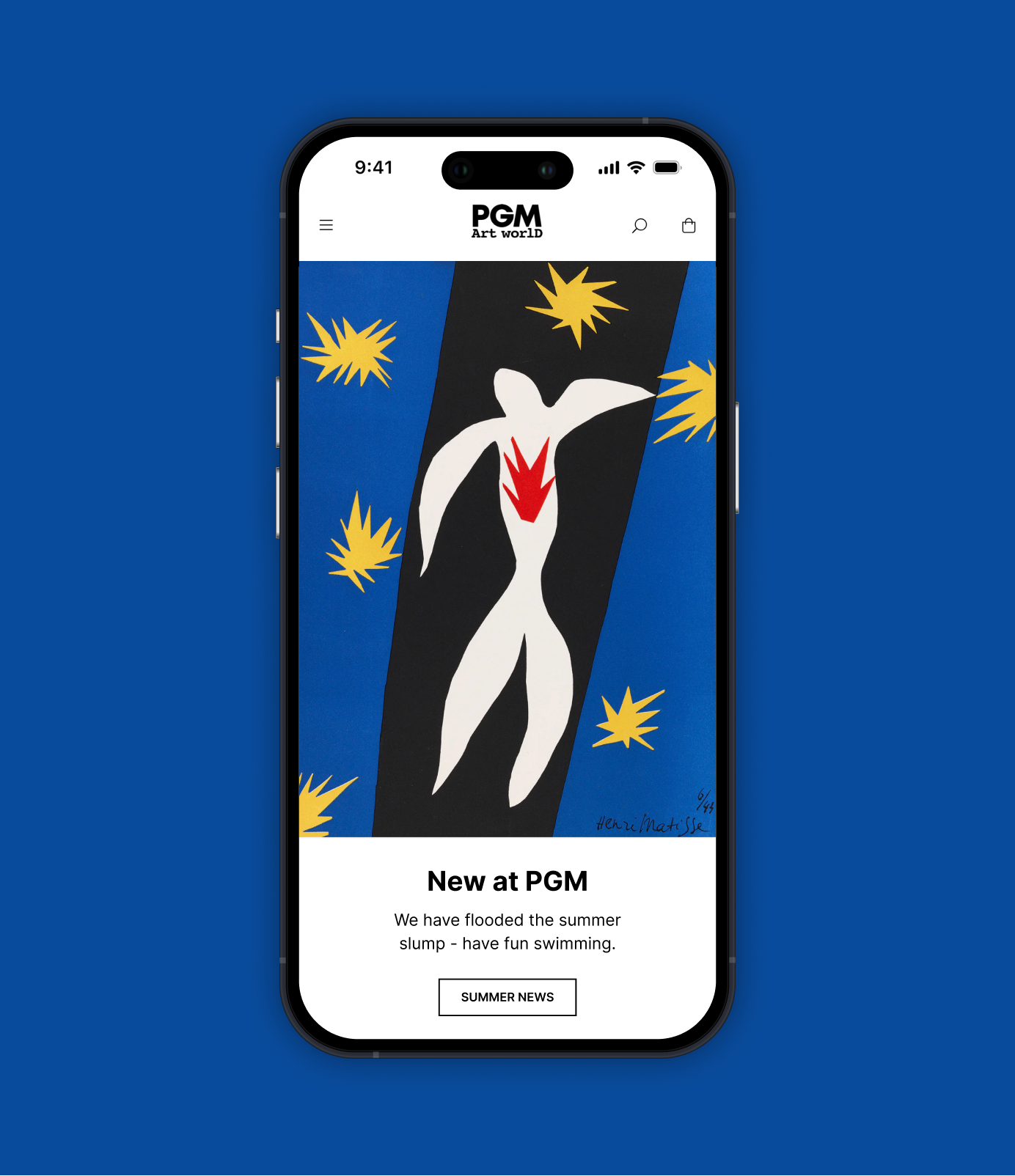
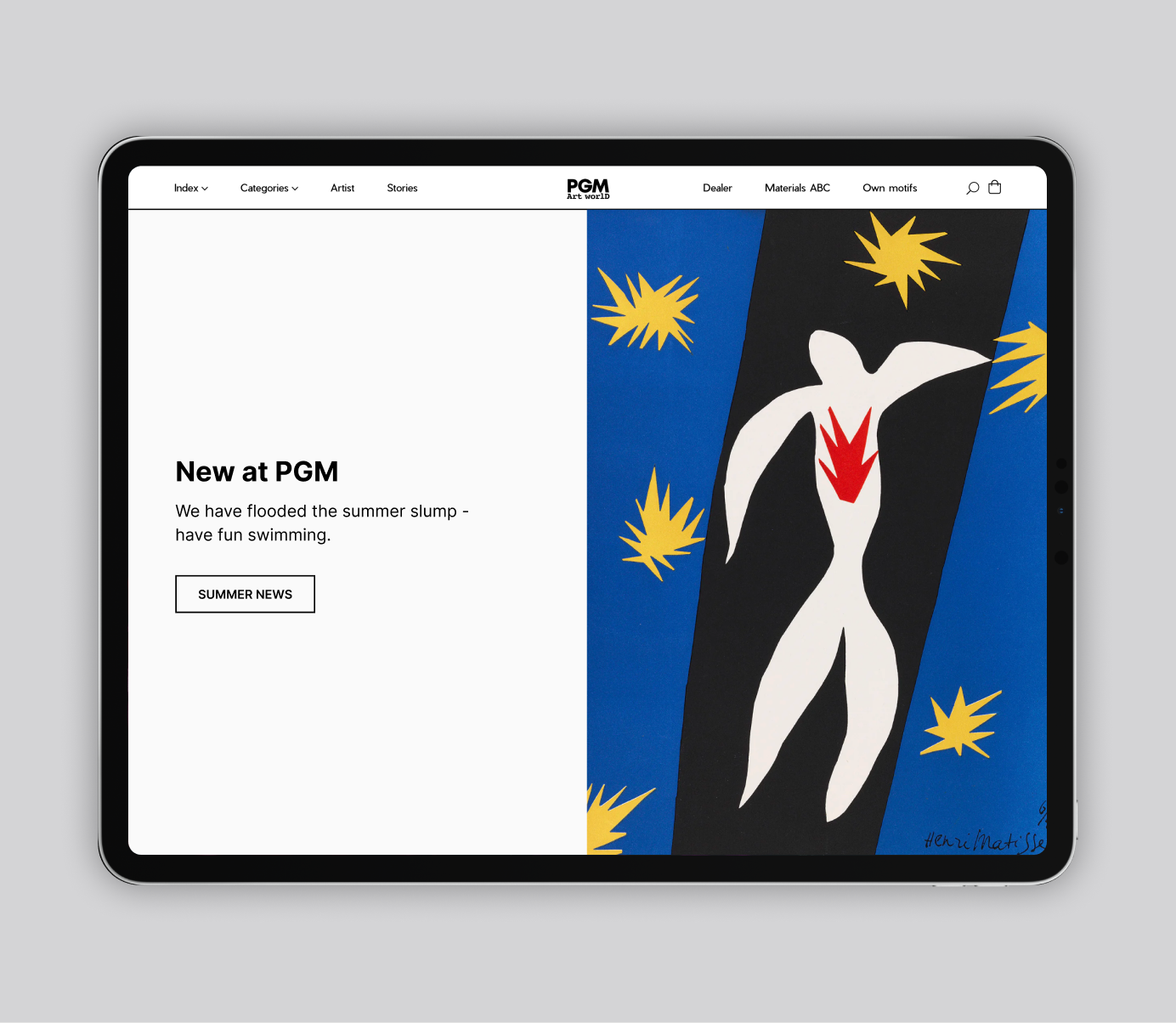
PGM needed to replace an aging Shopware 4 system without losing the business-specific functionality that had grown around it over many years. The old shop supported a product configurator, B2B partner access and sales workflows that were important for PGM’s reseller network.
The challenge was that B2C customers and B2B partners needed very different commerce experiences. End customers needed a modern, visual and easy-to-use art shop. B2B partners needed a more functional catalog with white-label presentation tools, wishlists and customer-specific workflows. A standard shop setup would not have served both groups well.
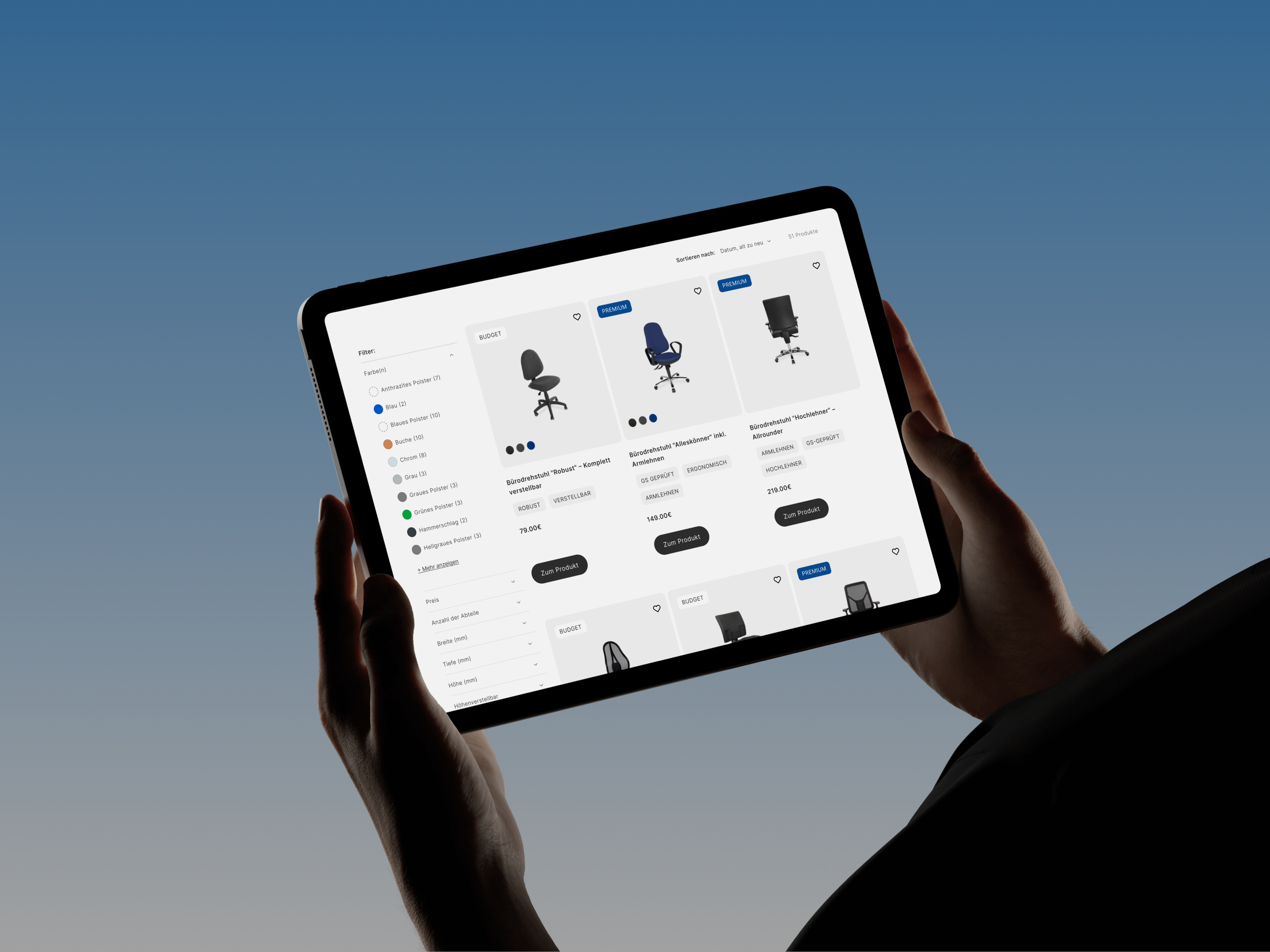
We recommended a multichannel architecture instead of forcing all users into one storefront. End customers received a modern Shopify shop focused on product discovery, artwork presentation and direct purchase. B2B partners received a separate headless catalog experience with features tailored to reseller workflows.
This separation allowed PGM to improve the experience for both audiences while still managing product information centrally. Shopify became the commerce foundation for the B2C shop, while the headless B2B catalog uses Shopify product data and enriches it with additional B2B logic from connected systems.
+
1
2
2
3
4
5
6
7
8
9
0
1
2
0
1
2
3
4
5
6
7
8
9
0
1
2
K
Visitors in the B2C Shop after the relaunch
+
1
2
2
3
4
5
6
7
8
9
0
1
2
0
1
2
3
4
5
6
7
8
9
0
1
2
%
More orders from PGM B2B partners
+
0
1
2
3
4
5
6
7
8
9
0
1
1
K
Products migrated successfully
0
1
2
3
4
5
6
7
8
9
0
1
1
0
1
2
3
4
5
6
7
8
9
0
1
1
New USP
PGM has the most cutting-edge digital sales tools throughout the German art publishing world
The project started with a technical consulting phase, because the most important decision was not the design of the new shop, but the right architecture for PGM’s B2C and B2B business. Together with the stakeholders, we evaluated the system requirements, defined the core user journeys and decided which parts should live in Shopify and which parts needed a custom headless solution.
After the architecture decision, we moved into concept, UX design, visual design and implementation. Wireframes and workshops helped define the product configurator, B2B catalog structure, partner workflows and product discovery logic. The final implementation combined a Shopify storefront for consumers with a custom headless B2B catalog for PGM’s partner network.
01
Tech Consulting
02
Concept & UX Design
03
Visual Design
04
Programming
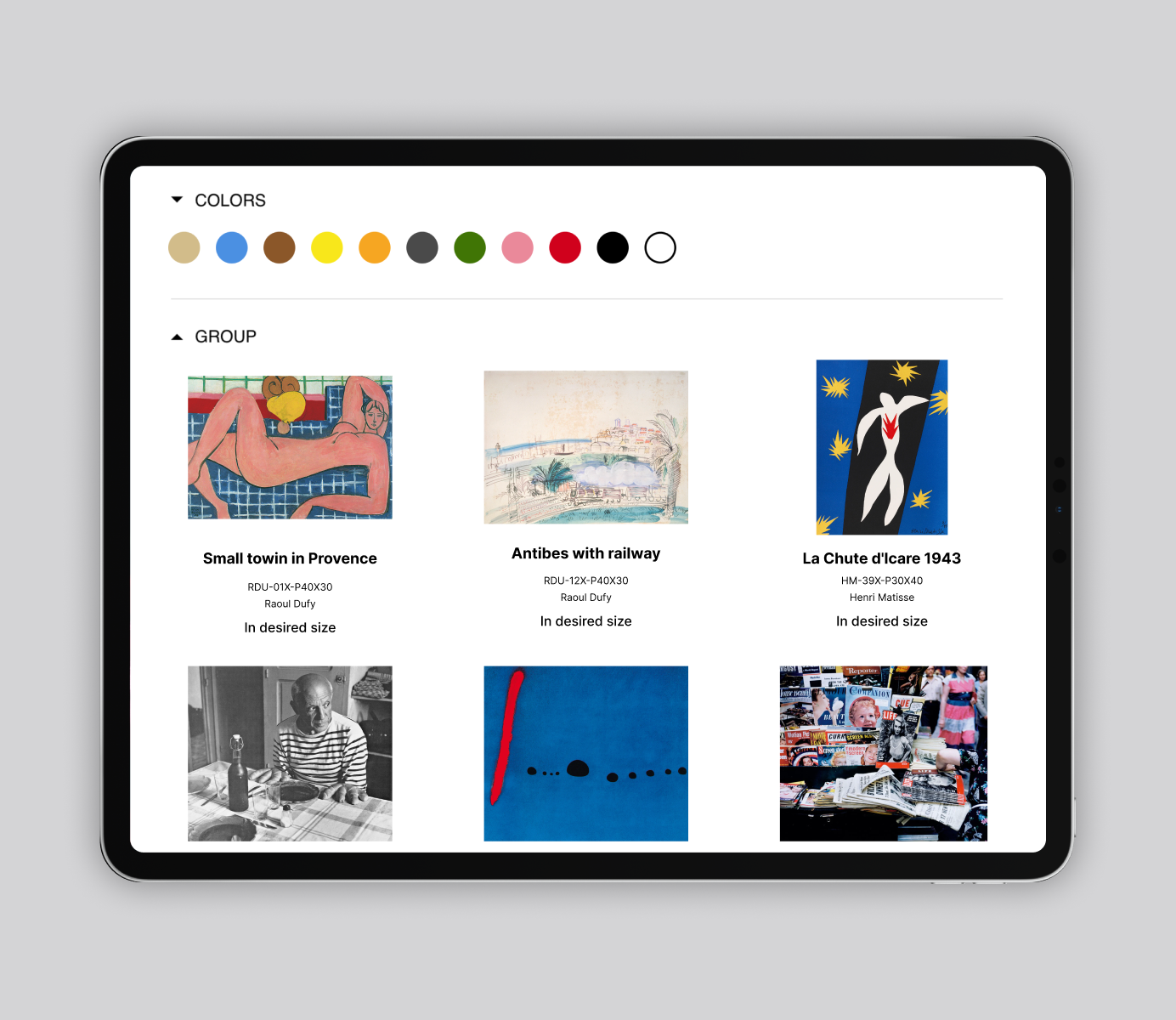
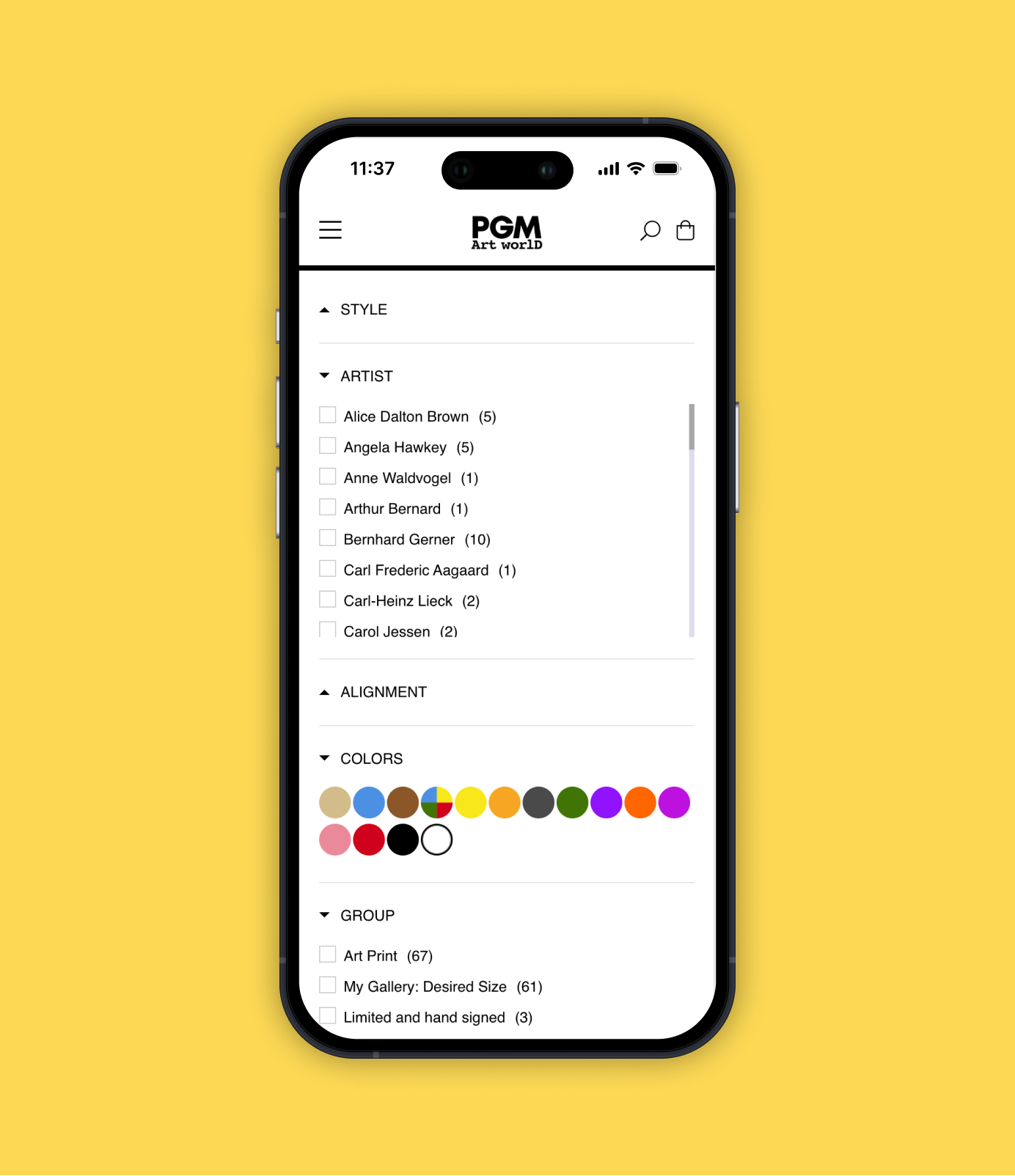
During the initial consulting phase, it became clear that a single standard shop would create compromises for both customer groups. End customers and B2B partners needed different content, different buying logic and different tools.
We therefore separated the channels. Consumers use a modern Shopify shop built for direct purchase and visual product discovery. B2B partners use a highly individualized headless catalog with reseller-specific features such as customer-specific wishlists and a white-label presentation mode.
This architecture gives PGM the flexibility to serve both groups properly without maintaining two disconnected product worlds. Product information remains centrally managed, while each channel only shows the information and functionality that is relevant for its users.

PGM sells art prints in many formats, materials and configurations. The product configurator was therefore a central part of the relaunch, because customers need to understand how a selected artwork changes depending on size, material and finishing option.
We modernized the configurator so both end customers and B2B partners can configure and order the right version of an artwork more easily. This makes the buying process more transparent and reduces friction for a product category where configuration strongly affects the final purchase decision.
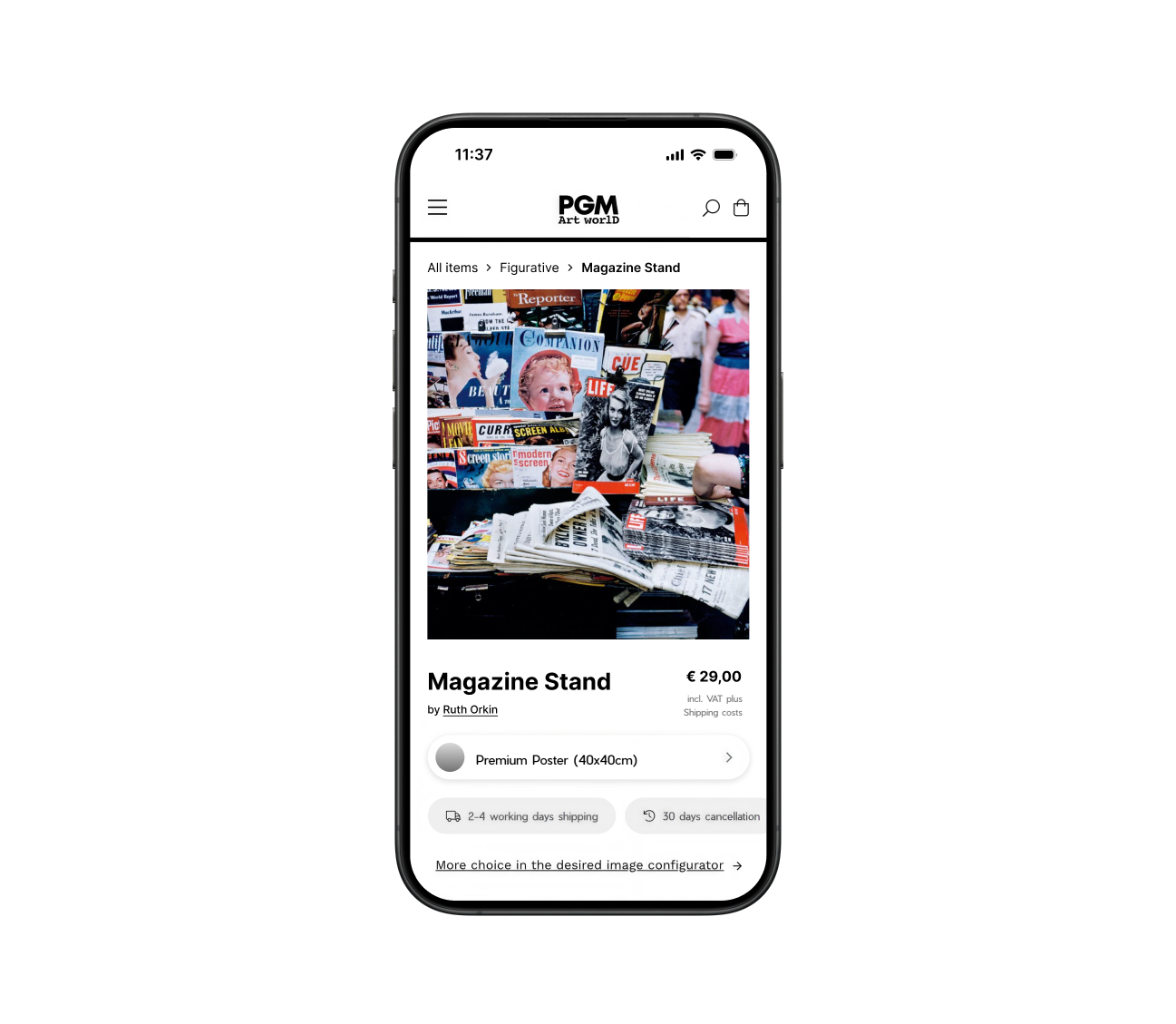
PGM traditionally sent printed catalogs to partners each year. The new headless B2B catalog creates a more efficient digital alternative that reduces printing and shipping effort while giving partners more flexible access to the product range.
The catalog was designed as a practical sales tool, not only as a digital product list. Partners can use the white-label mode to present products to their own customers, which turns the platform into a tool for both internal product management and external sales support.
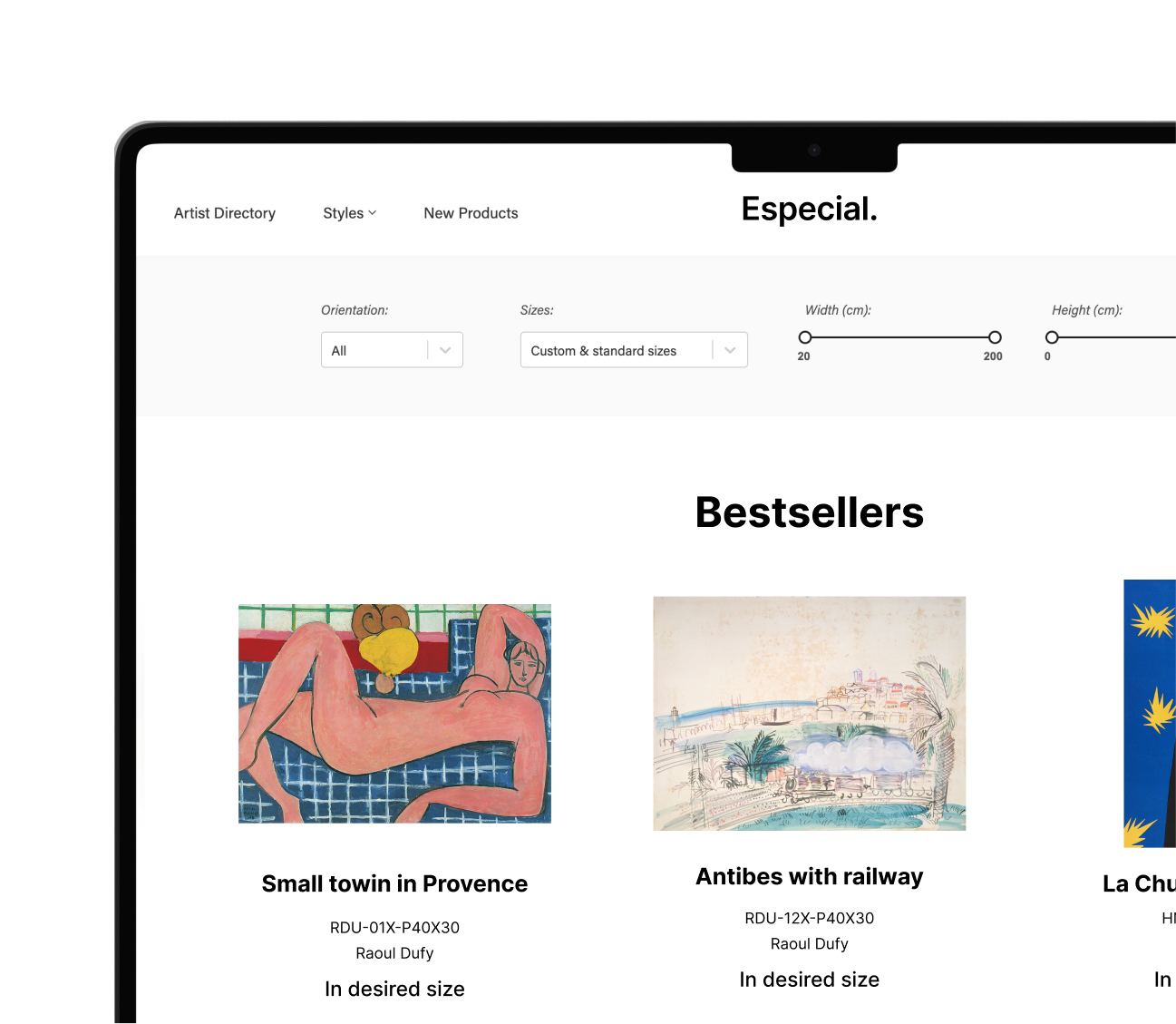
The B2B catalog supports reseller workflows that go beyond a normal shop experience. PGM partners can create wishlists for their customers, share temporary access and allow customers to review selected artworks from home.
Orders can then be passed back through the partner structure to PGM. This creates a B2B2C flow where partners remain part of the customer relationship, while the digital experience makes the selection and ordering process much easier.

The new setup separates B2C and B2B needs without creating unnecessary complexity for PGM. End customers see a clean Shopify shop focused on artwork, inspiration and purchase. B2B partners see the additional information, tools and workflows they need for professional selling.
Both experiences are powered by shared product information, which helps PGM keep operations manageable while still offering tailored digital experiences to different audiences.
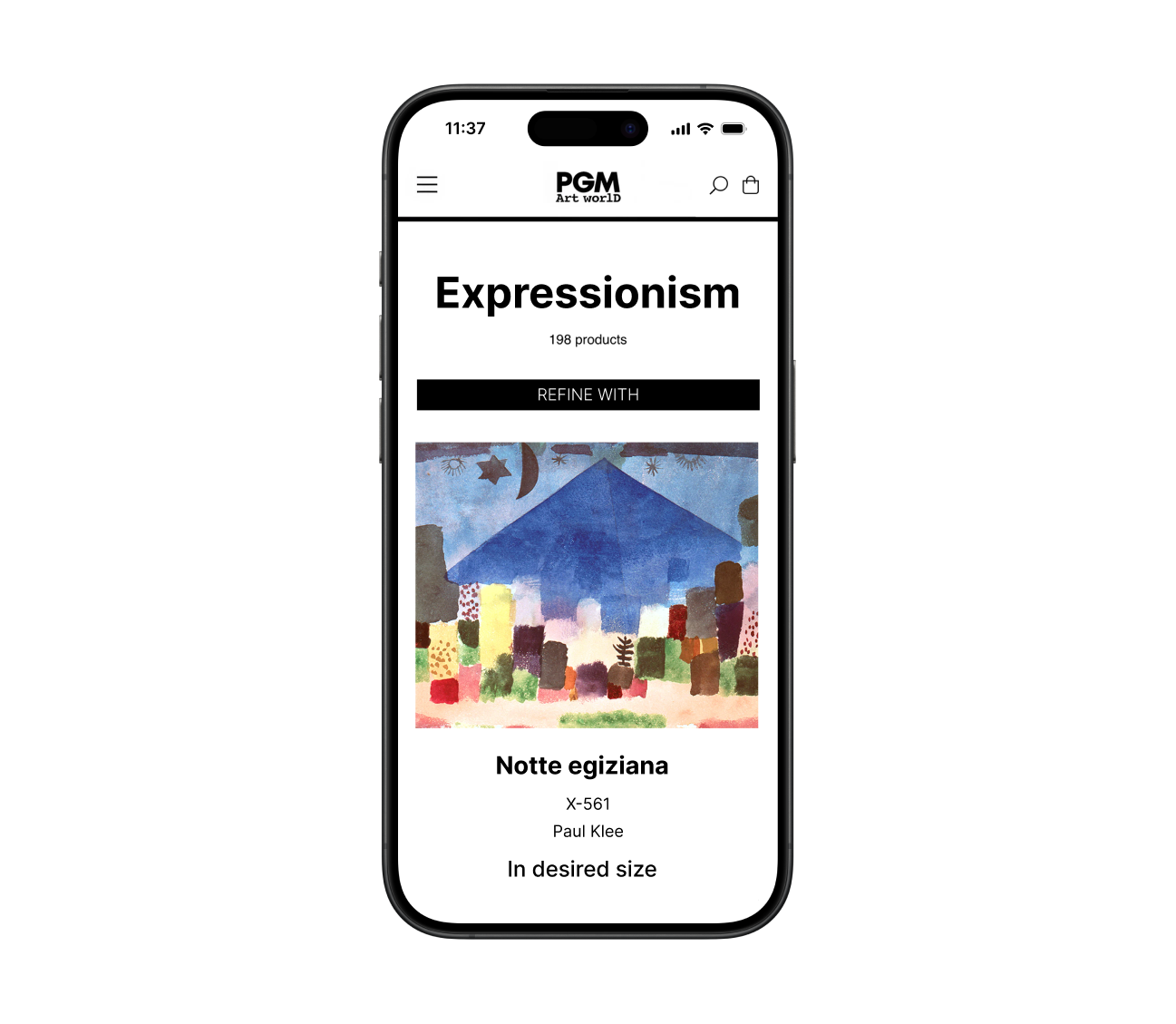
The visual design was built around the artwork. PGM’s products are highly visual, so the interface needed to make images the focus while still supporting a clear and functional commerce experience.
We took inspiration from museums, art books and editorial layouts. The design uses generous image areas, clear typography and a restrained interface so the artworks can stand out. Product pages give users enough space to inspect details, understand formats and discover related
works or artists.
The B2B catalog follows the same principle, but with more functional depth. Partners already know the product range and need efficient tools, so the design balances visual quality with faster access to relevant product and sales information.
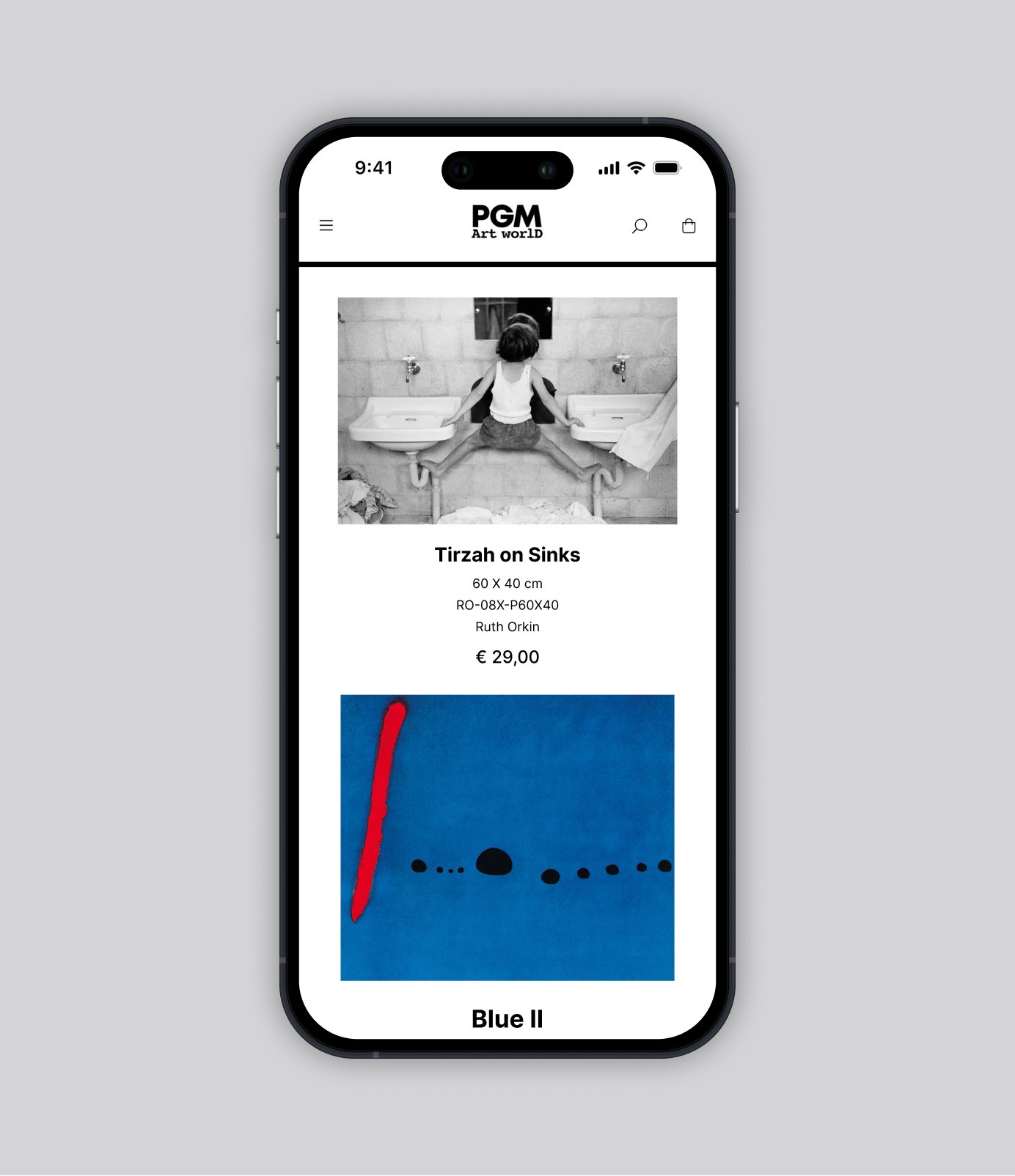
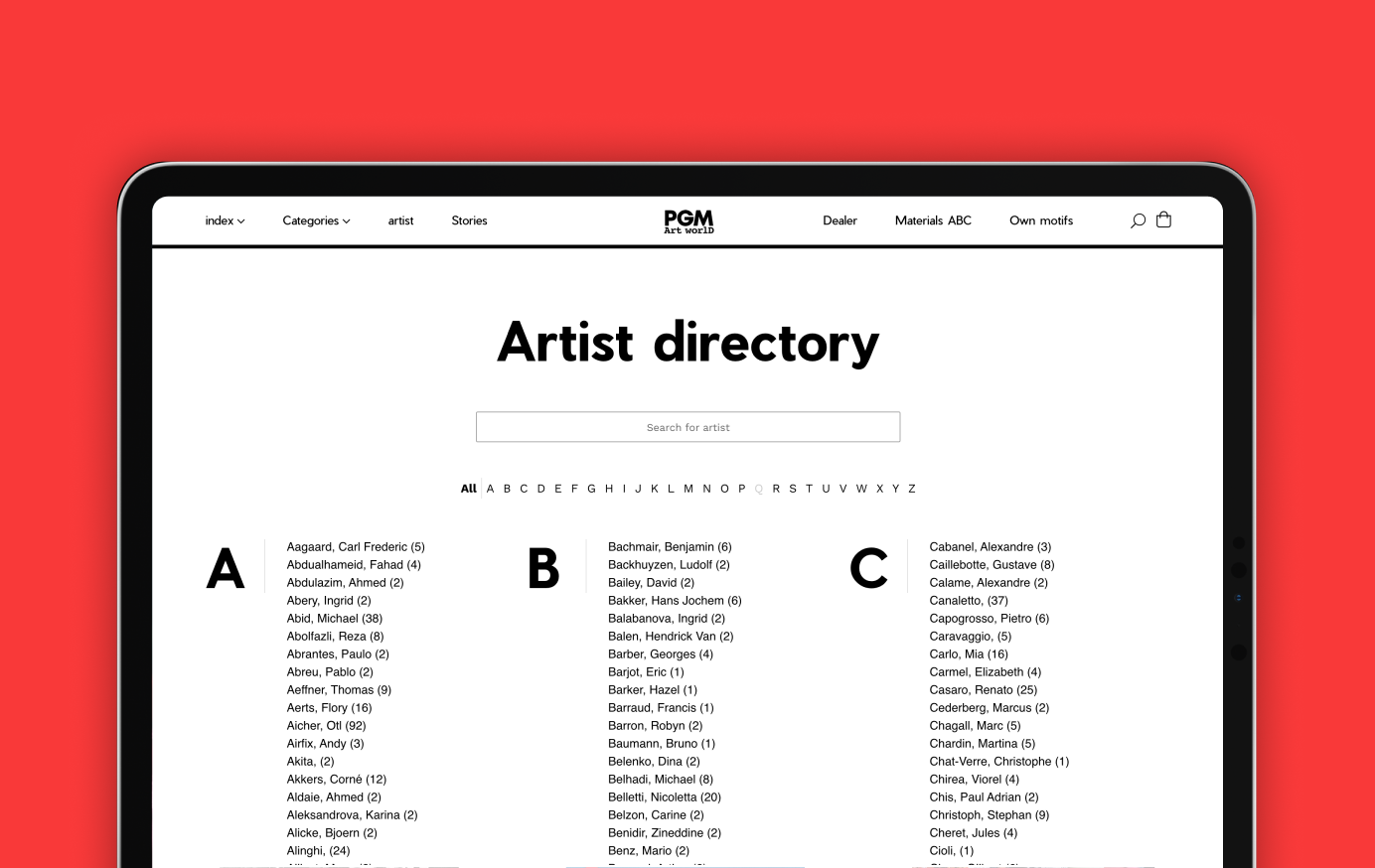
The B2C shop was implemented as a Shopify storefront with a custom product configurator and a visual commerce experience for end customers. The B2B catalog was implemented as a headless front end that uses Shopify product data and enriches it with additional B2B information from connected systems.
This setup allowed us to keep Shopify as the commerce and product foundation while building custom functionality where PGM’s partner workflows required more flexibility. The result is a pragmatic architecture: standard commerce where standard commerce works, and custom development where the business model needs it.
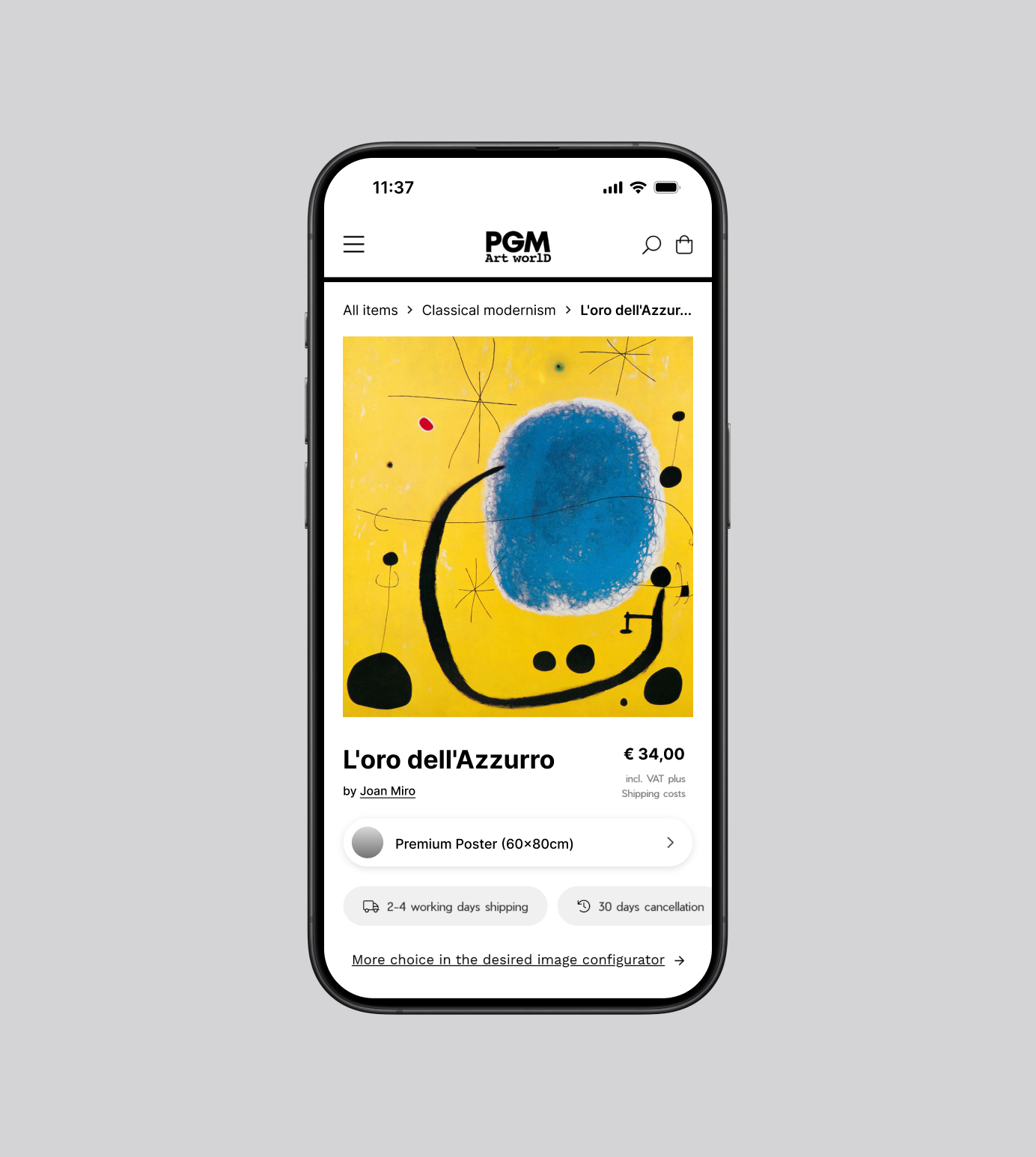
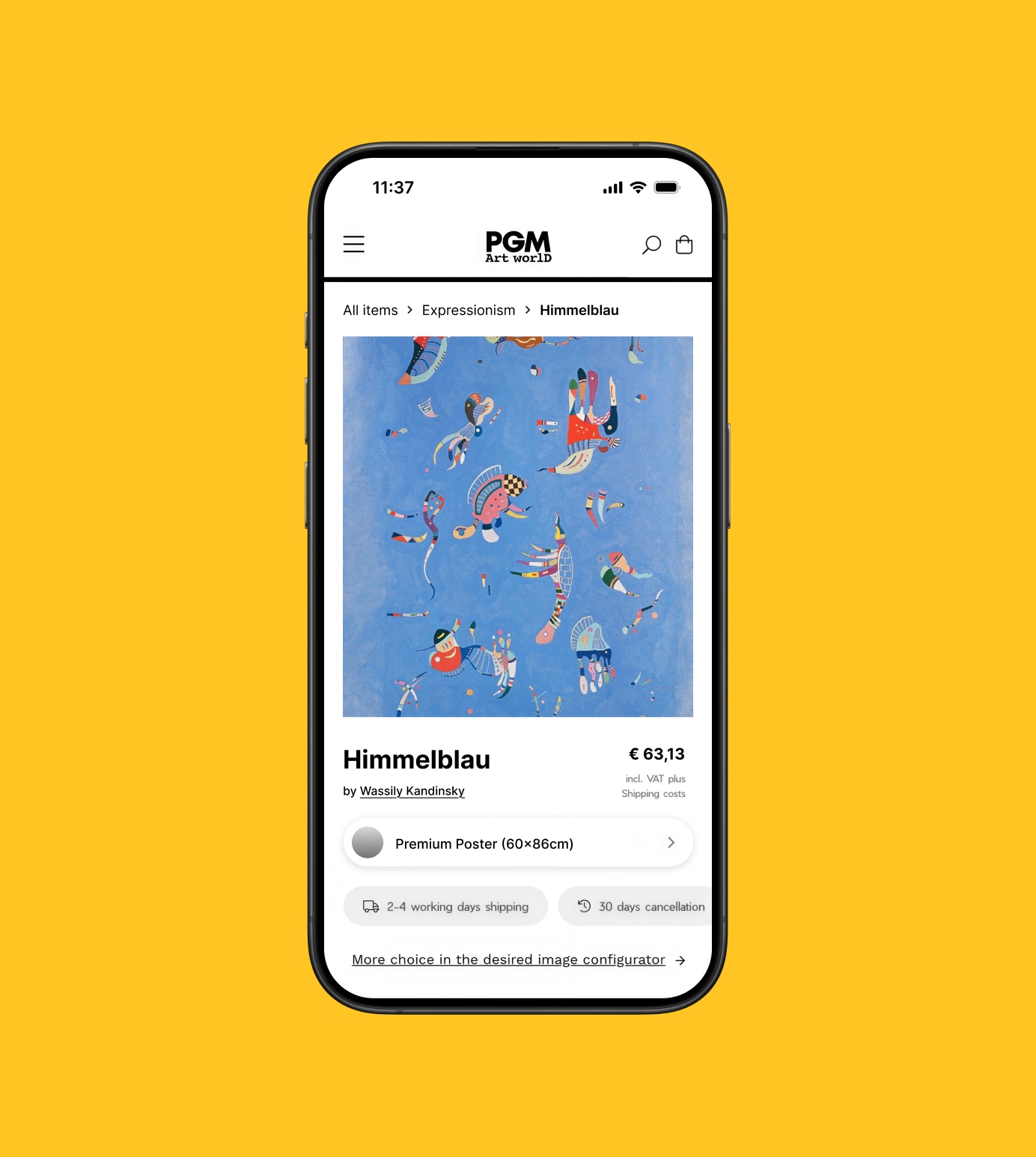
The relaunch gave PGM a modern Shopify shop for end customers and a powerful headless B2B catalog for partners. Instead of trying to serve all use cases through one generic storefront, PGM now has two tailored digital experiences connected through a shared product foundation.
The B2B catalog became a strong sales tool for partners, with white-label presentation, customer wishlists and B2B2C ordering flows. This helped PGM strengthen its partner network and create a digital USP in the
German art publishing market.
After launch, the B2C shop reached more than 53,000 visitors, while the B2B partner setup contributed to a 28% increase in orders from PGM partners. More importantly, the project gave PGM a platform architecture that can support future commerce and partner-service requirements without returning to the limits of the old Shopware system.
+
1
2
2
3
4
5
6
7
8
9
0
1
2
0
1
2
3
4
5
6
7
8
9
0
1
2
K
Visitors in the B2C Shop after the relaunch
+
1
2
2
3
4
5
6
7
8
9
0
1
2
0
1
2
3
4
5
6
7
8
9
0
1
2
%
More orders from PGM B2B partners
+
0
1
2
3
4
5
6
7
8
9
0
1
1
K
Products migrated successfully
0
1
2
3
4
5
6
7
8
9
0
1
1
0
1
2
3
4
5
6
7
8
9
0
1
1
New USP
PGM has the most cutting-edge digital sales tools throughout the German art publishing world



NEW

NEW