Betriebseinrichtung.de - B2B Shopify Plus migration, UX redesign and ERP integration
B2B Shopify Plus migration for a furniture commerce platform
Betriebseinrichtung.de - B2B Shopify Plus migration, UX redesign and ERP integration
Betriebseinrichtung-Sofort is part of Ceha Deutschland GmbH and serves B2B customers across Germany, Austria and Switzerland with steel furniture, office furniture and factory equipment. The company had a strong product range, but the existing ecommerce platform no longer matched the quality of the business, the complexity of the catalogue or the buying expectations of modern B2B customers.
Especial supported the relaunch with strategy, UX/UI design, Shopify Plus development and a custom ERP integration. Within five months, we migrated the shop to Shopify Plus, rebuilt the customer experience, improved product discovery across more than 2,000 products and connected Shopify with the existing ERP system through a custom Shopify app.

Betriebseinrichtung-Sofort (Ceha Deutschland GmbH)
5 Months
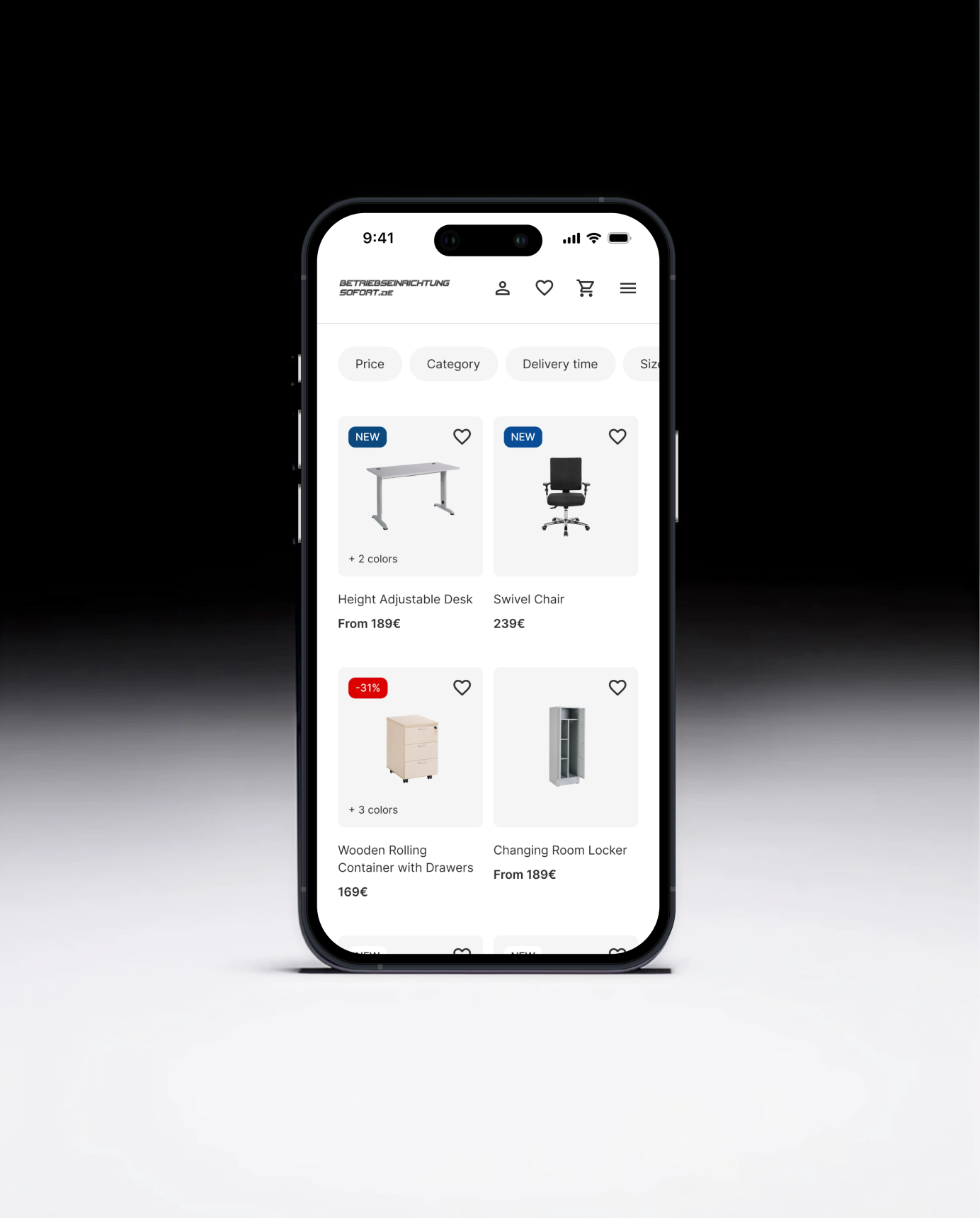
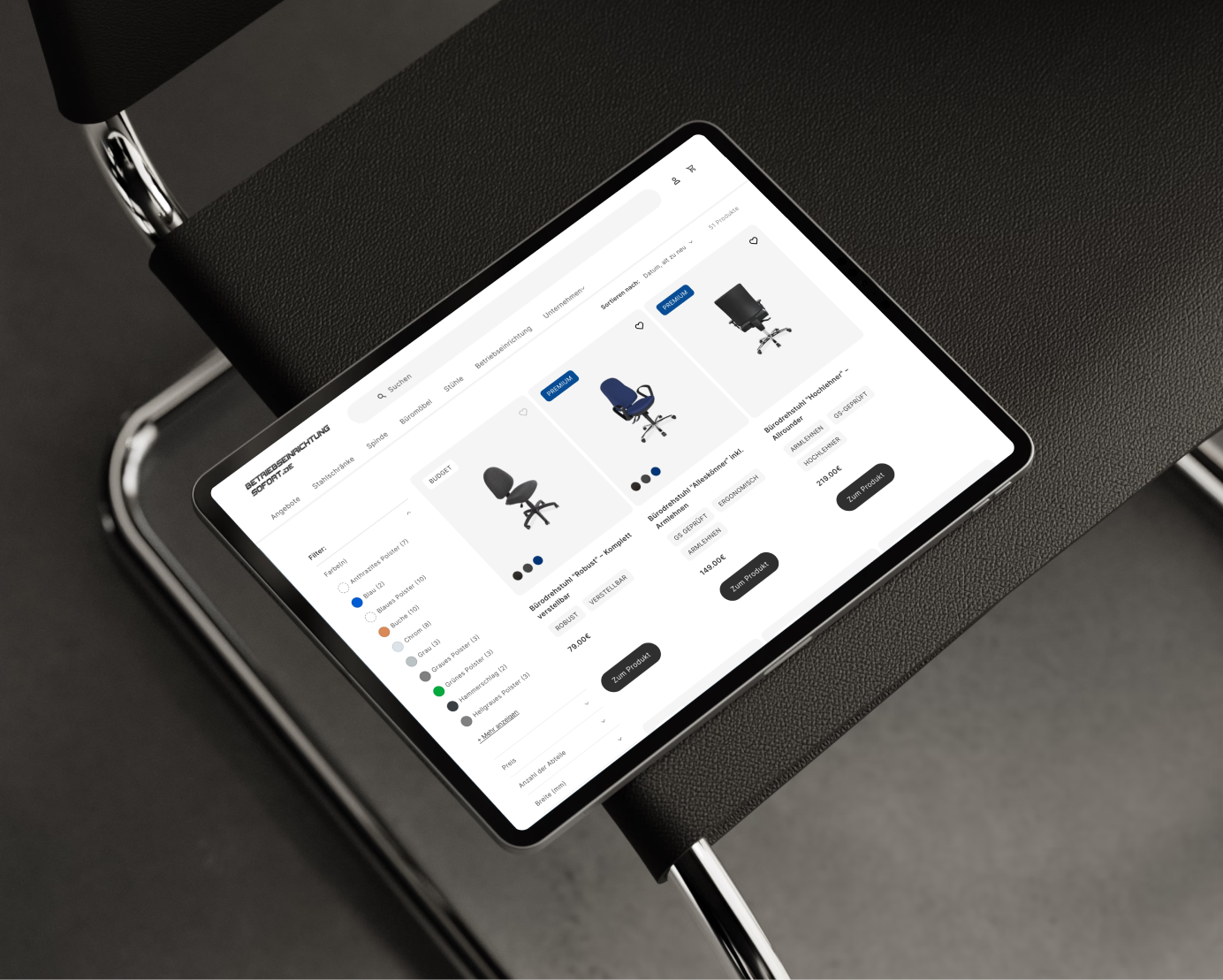
Betriebseinrichtung-Sofort had an opportunity to turn an outdated ecommerce platform into a stronger B2B commerce foundation. The goal was not only to make the shop look more modern, but to make it easier for customers to find the right products, understand variants, place larger orders and move through the buying journey with less friction.
The migration to Shopify Plus gave the project a more scalable commerce foundation. At the same time, the platform had to support the realities of B2B furniture commerce: a large product catalogue, structured navigation, clear product detail pages, bulk ordering, variant selection, account-related workflows and a reliable connection to the ERP system behind the business.
We worked closely with the Betriebseinrichtung-Sofort team to define the right structure for the new Shopify Plus platform. Before moving into implementation, we looked at the existing shop, the product catalogue, user flows, navigation patterns, competitor benchmarks and the operational requirements behind the storefront.
From there, we designed and developed a custom Shopify experience that improved usability without disconnecting the shop from the company’s existing processes. The result is a cleaner, faster and more flexible B2B commerce platform that combines a modern customer experience with the technical foundation needed for long-term operation.


B2B commerce projects are rarely only about the storefront. For Betriebseinrichtung-Sofort, the challenge was to improve the customer-facing experience while also creating a platform that could support internal workflows, ERP data synchronization and future commerce features.
Together with the client team, we focused on three central goals: modernizing the user experience, reducing friction in B2B buying flows and making the large product catalogue easier to navigate. These goals shaped the project from concept and design through to Shopify development and ERP integration.
The legacy shop was built on outdated technology and made it harder than necessary for customers to browse, compare and buy products. Navigation, page structure and performance all created friction. We migrated the platform to Shopify Plus, redesigned the key customer journeys and created a cleaner interface that better reflects the quality and functionality of the products.
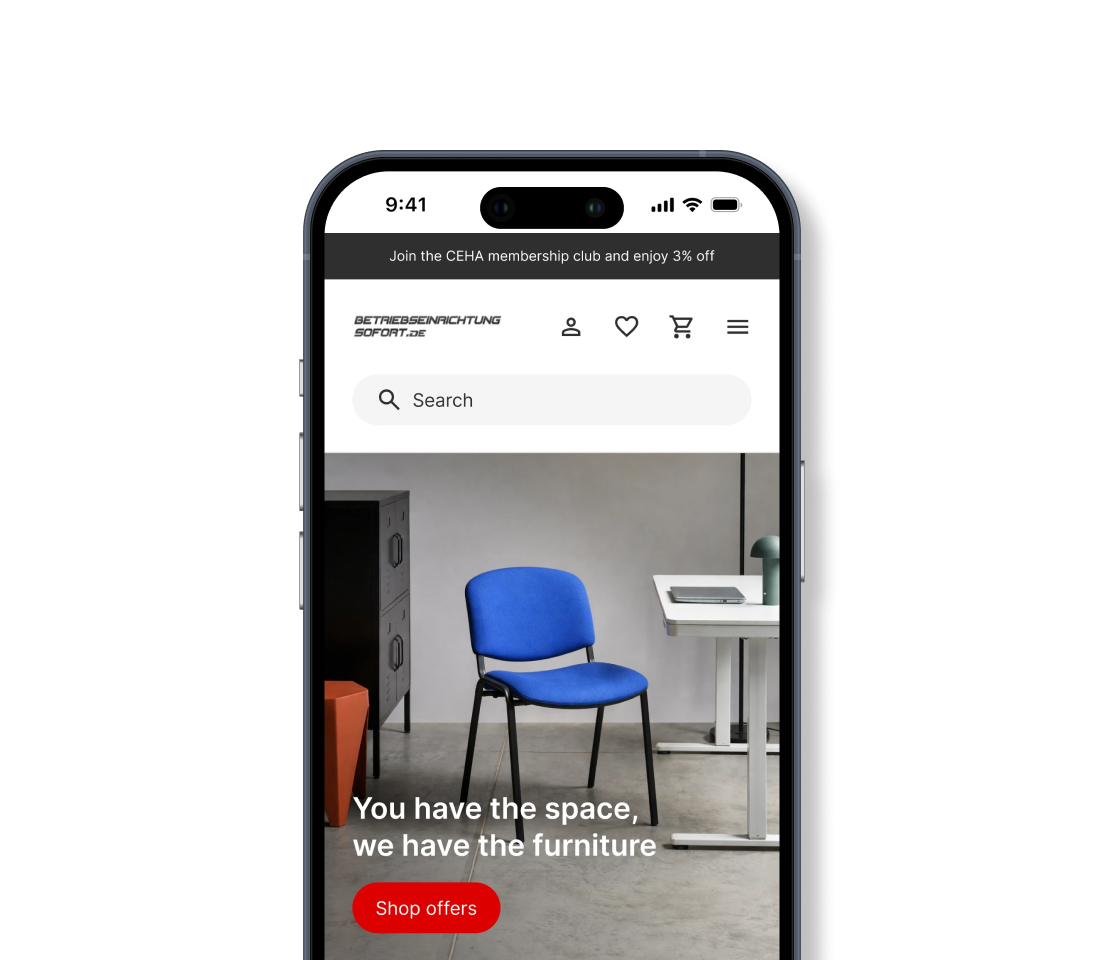
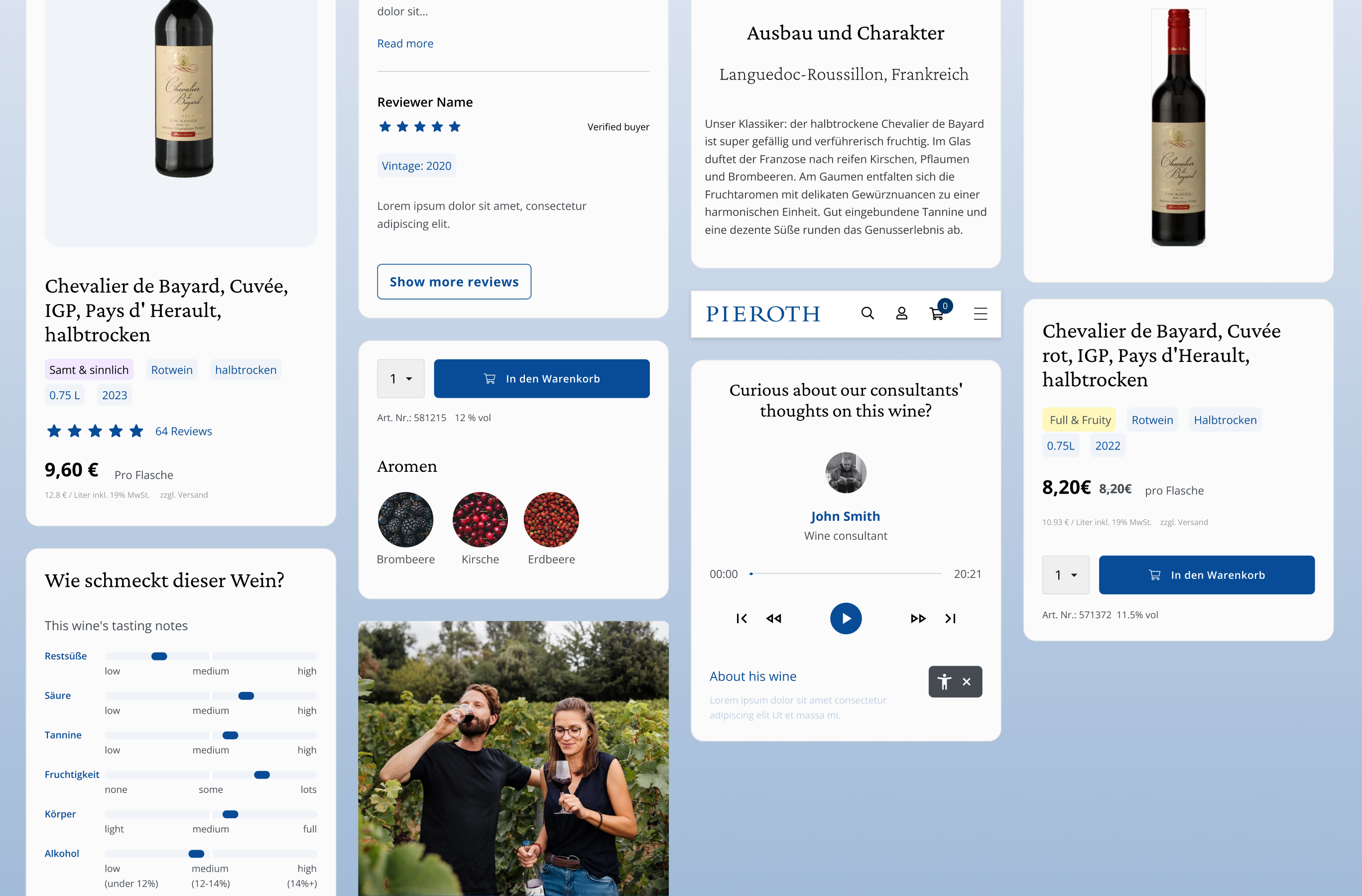
B2B customers often buy differently from DTC customers. They need clear product information, efficient ordering, understandable variants, transparent cart logic and account-related workflows. We improved the structure of product pages, cart interactions and purchasing flows to make the platform easier to use for both individual buyers and business customers.
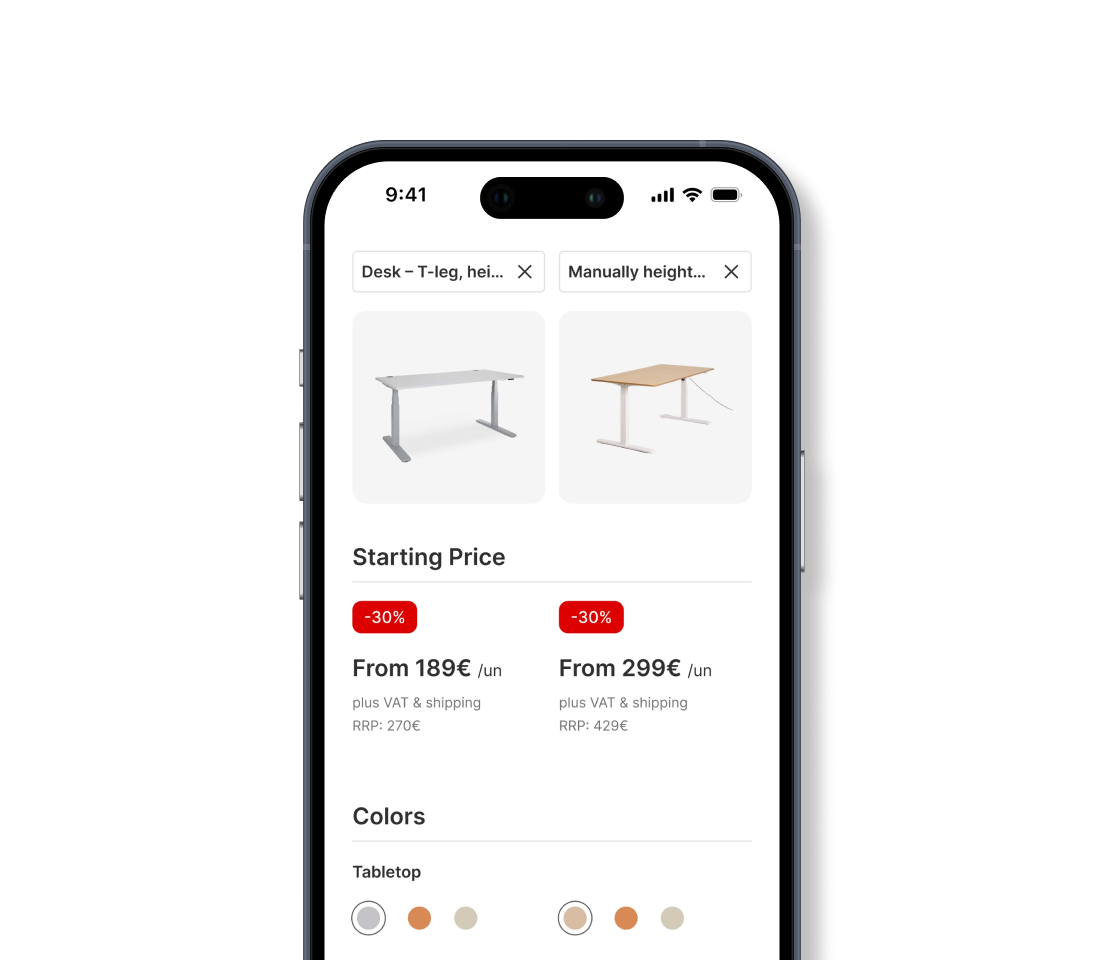
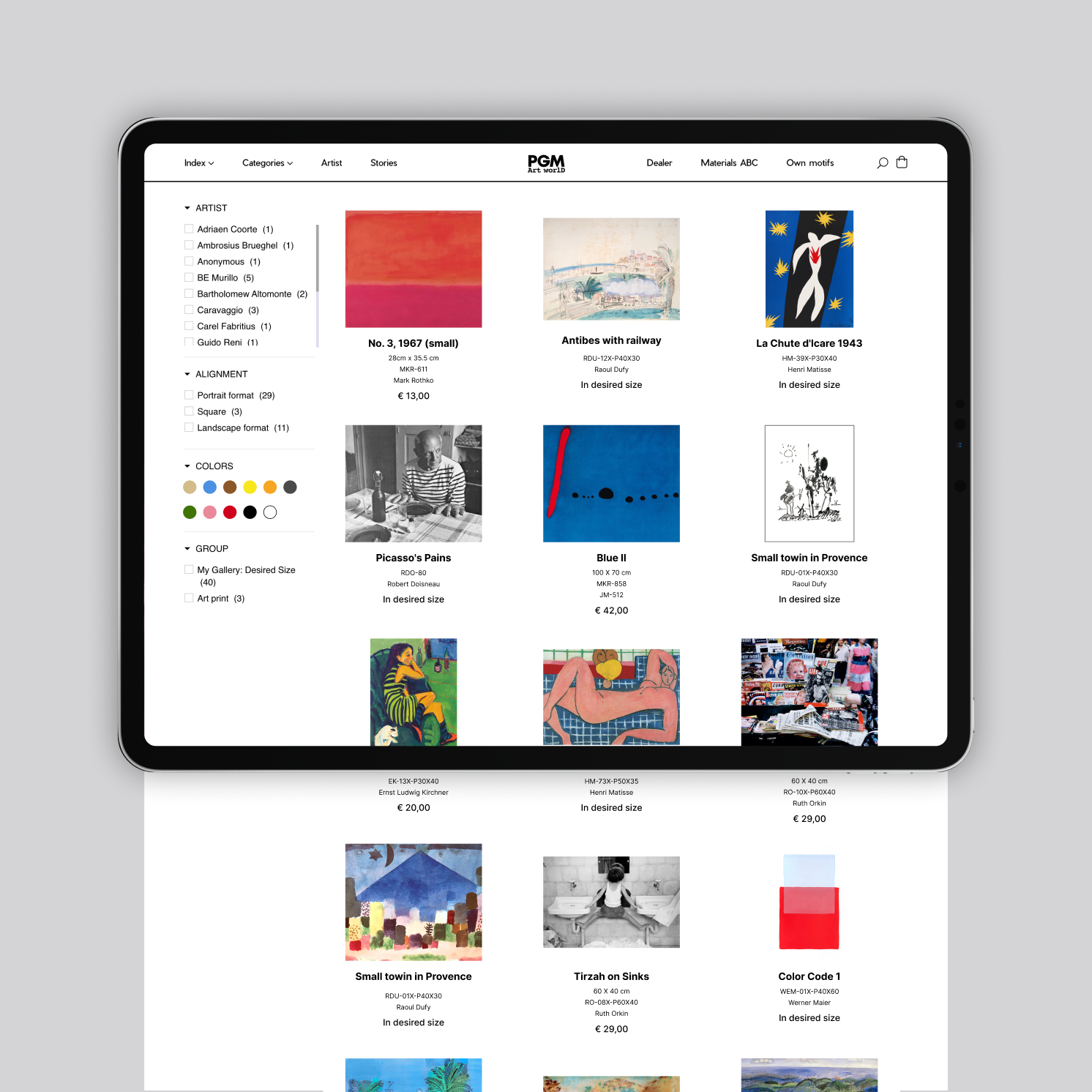
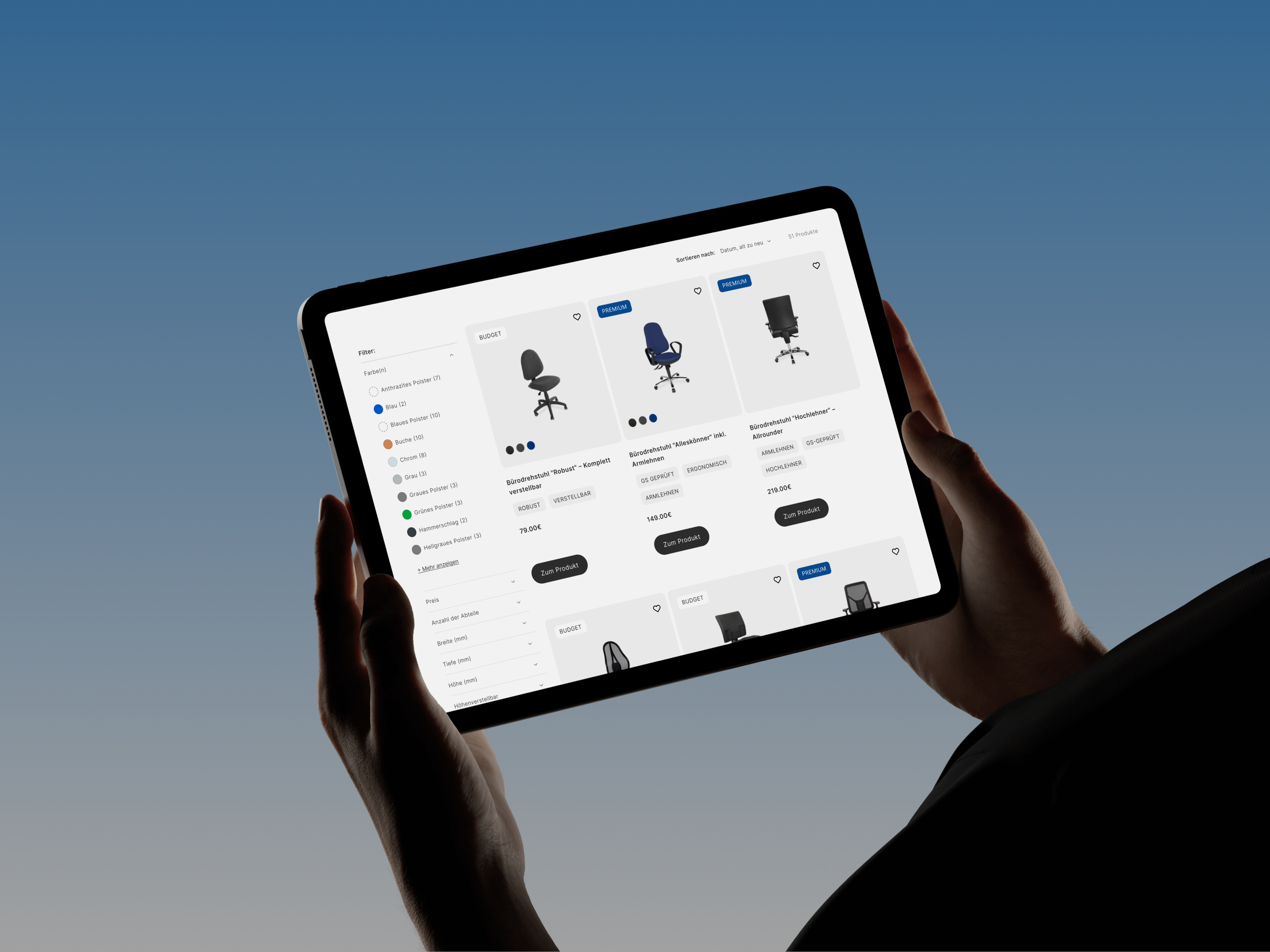
With more than 2,000 products, product discovery was one of the most important parts of the project. We improved navigation, filtering and search patterns so customers can move through the catalogue more confidently. This is especially important in B2B commerce, where users often need to find a specific configuration, product type or use case rather than simply browse visually.
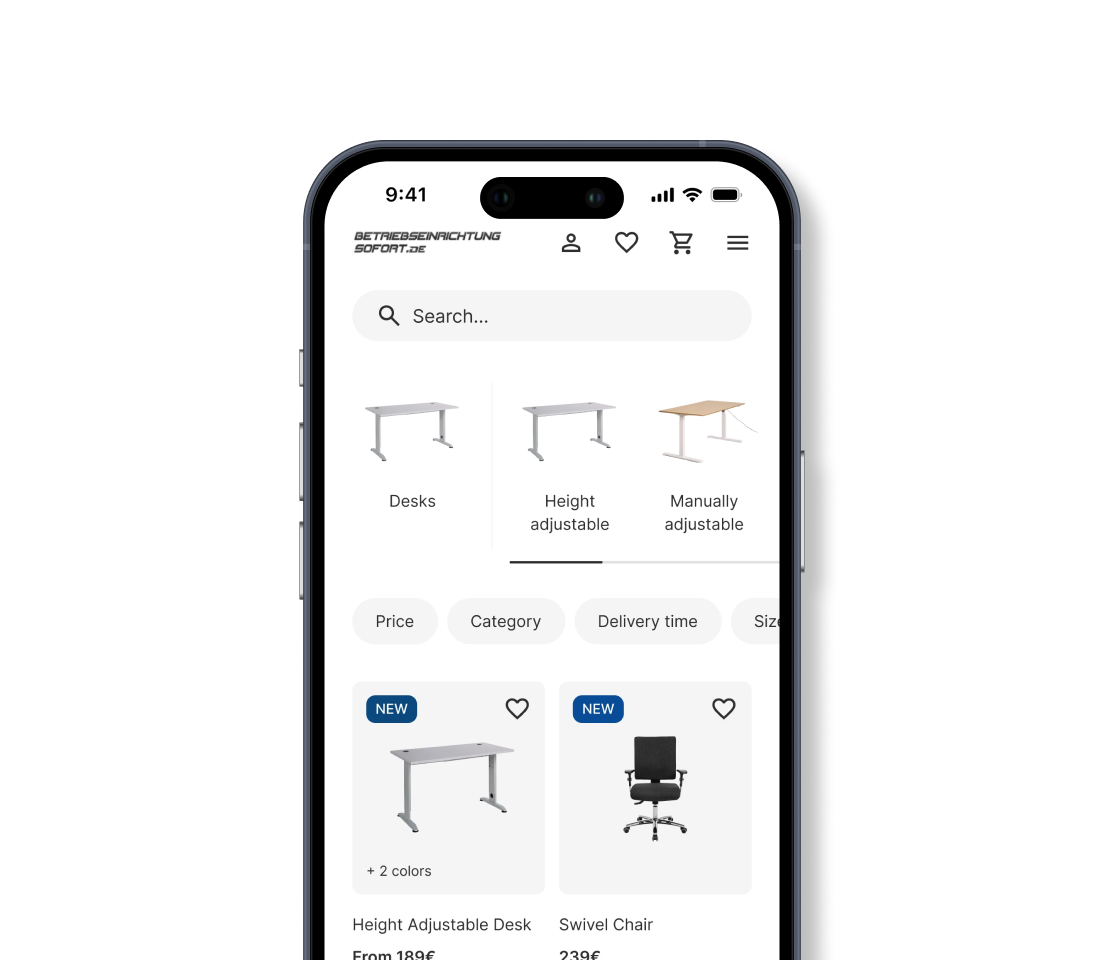
The project started with a clear concept phase. We worked with the client team to understand the business goals, catalogue structure, user needs and technical requirements behind the relaunch. This helped us define a focused scope and avoid turning the migration into an unnecessary rebuild of every internal process.
The concept work covered information architecture, user flows, navigation, product discovery, content structure and the role Shopify Plus should play in the new commerce setup. This created a practical foundation for design and development, while keeping the project aligned with the five-month launch timeline.
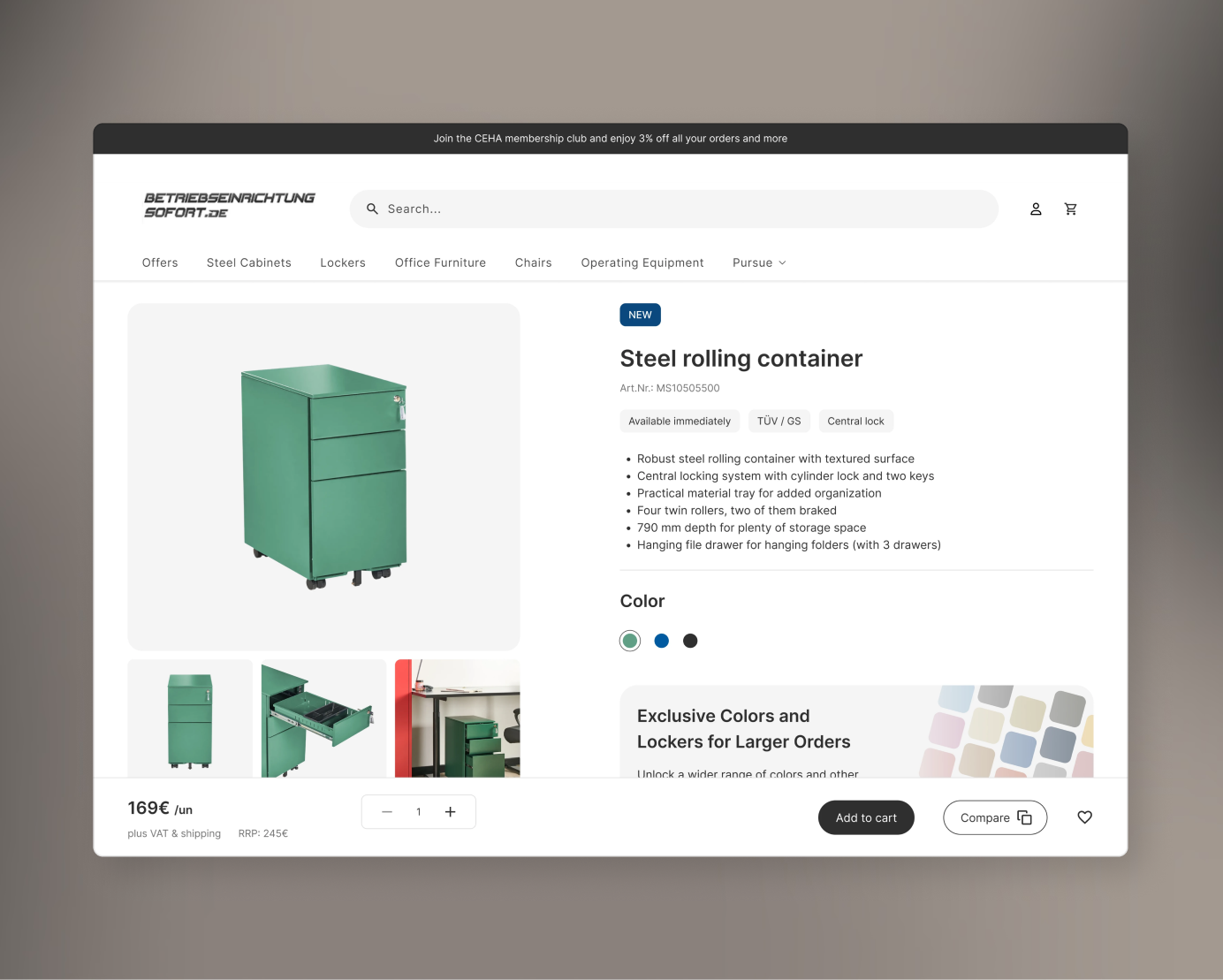
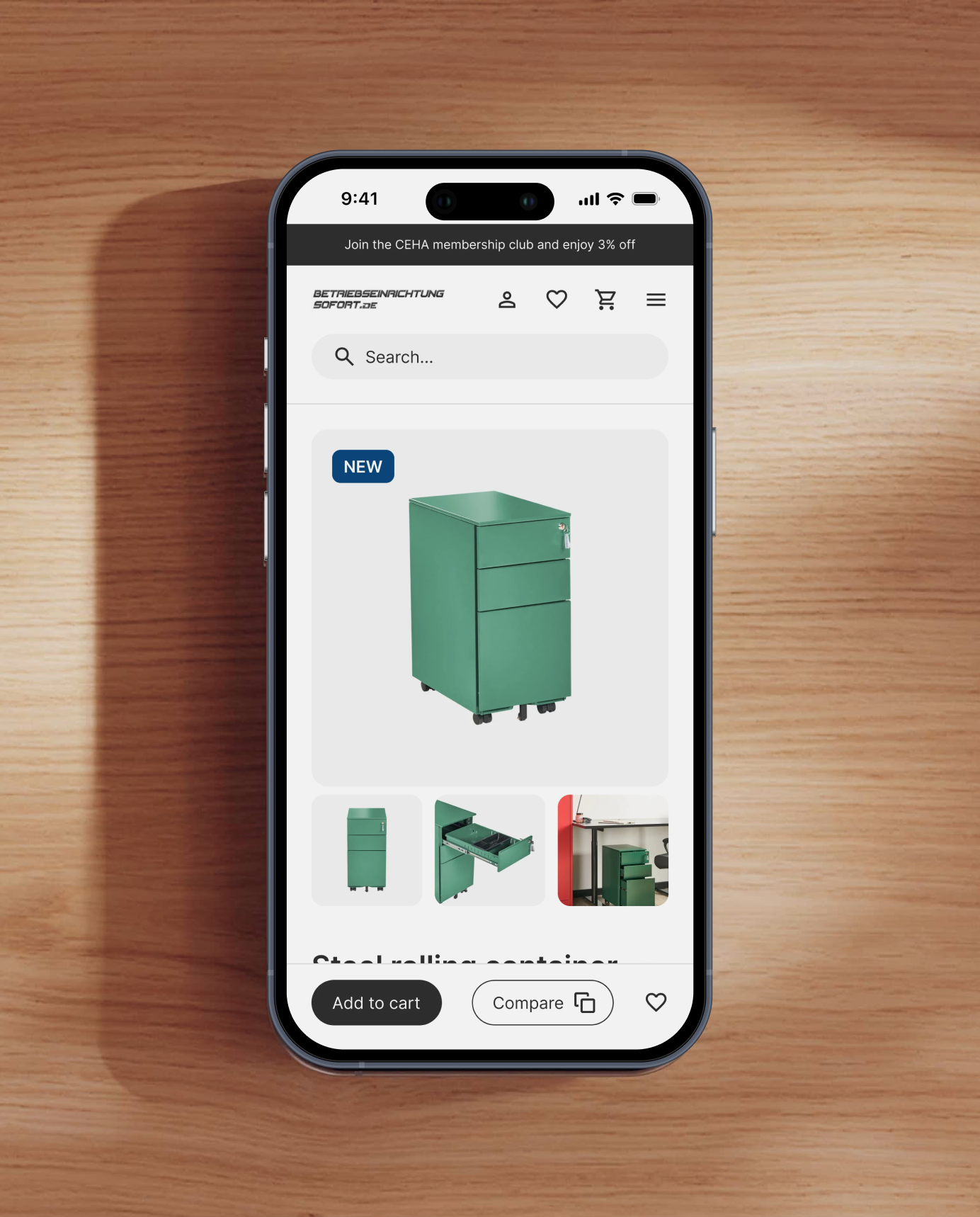
During the design phase, we focused on creating a more structured and intuitive B2B shopping experience. The new interface needed to feel modern and clean, but it also had to support practical buying behavior: finding the right product, understanding options, comparing information and moving into the cart without unnecessary friction.
We redesigned key page types, improved visual hierarchy and created responsive layouts for different user contexts. The product detail pages were structured to make information easier to scan, while cross-selling and upselling elements support more relevant product exploration. The cart experience was also refined to make the purchasing journey clearer.
The design process was based on close collaboration in Figma. Shared design ownership made feedback faster, reduced handoff friction and helped keep the implementation aligned with the client’s business requirements. A custom design system supported consistency across the new storefront and made the handoff to development more efficient.
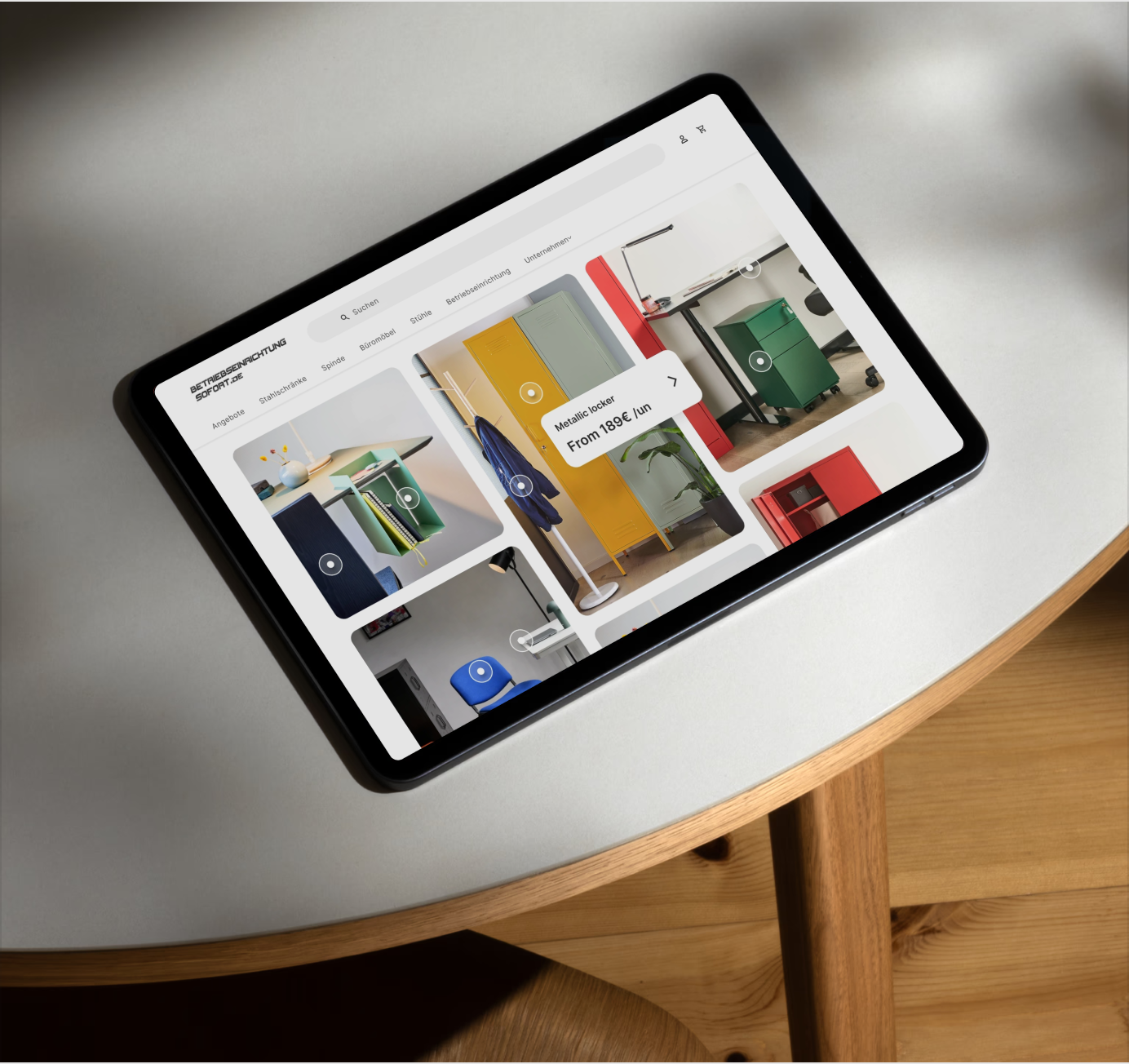
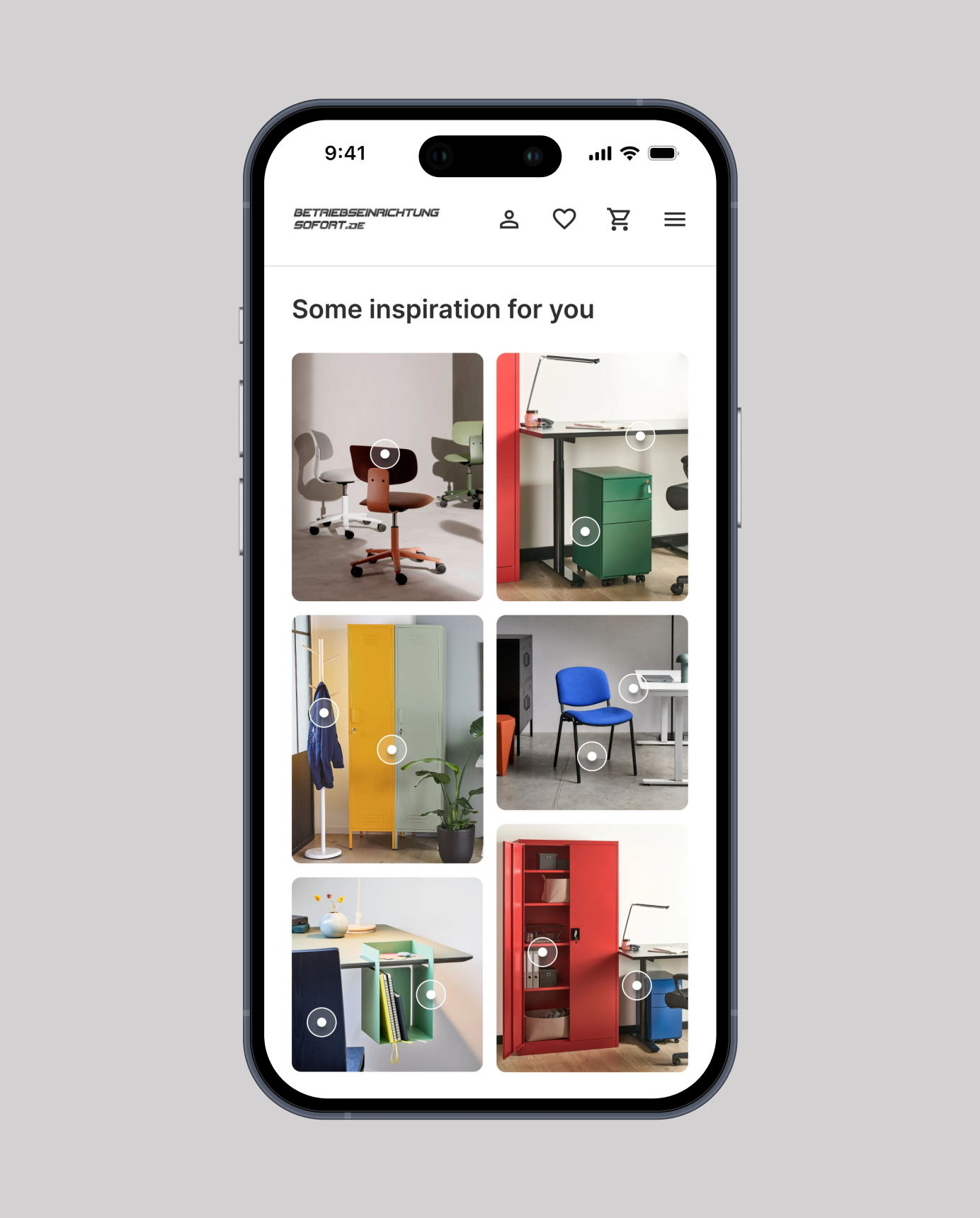
During development, we focused on building a Shopify Plus setup that was flexible, performant and maintainable. We developed a custom Shopify theme based on Shopify Liquid, HTML, CSS and JavaScript. GSAP was used for selected animations where they added to the experience without making the storefront unnecessarily heavy.
To give the Betriebseinrichtung-Sofort team more independence after launch, we built flexible Shopify Customizer sections. These sections allow the team to create landing pages, campaign pages and content areas without developer support, which reduces operational dependency and makes the platform easier to evolve over time.
A key technical part of the project was the ERP integration. We developed a custom Shopify app using Node.js serverless functions, hosted on Vercel, to synchronize order and customer data with the existing ERP system multiple times per day. This gave the client a modern Shopify Plus storefront while keeping the shop connected to the operational systems behind the business.
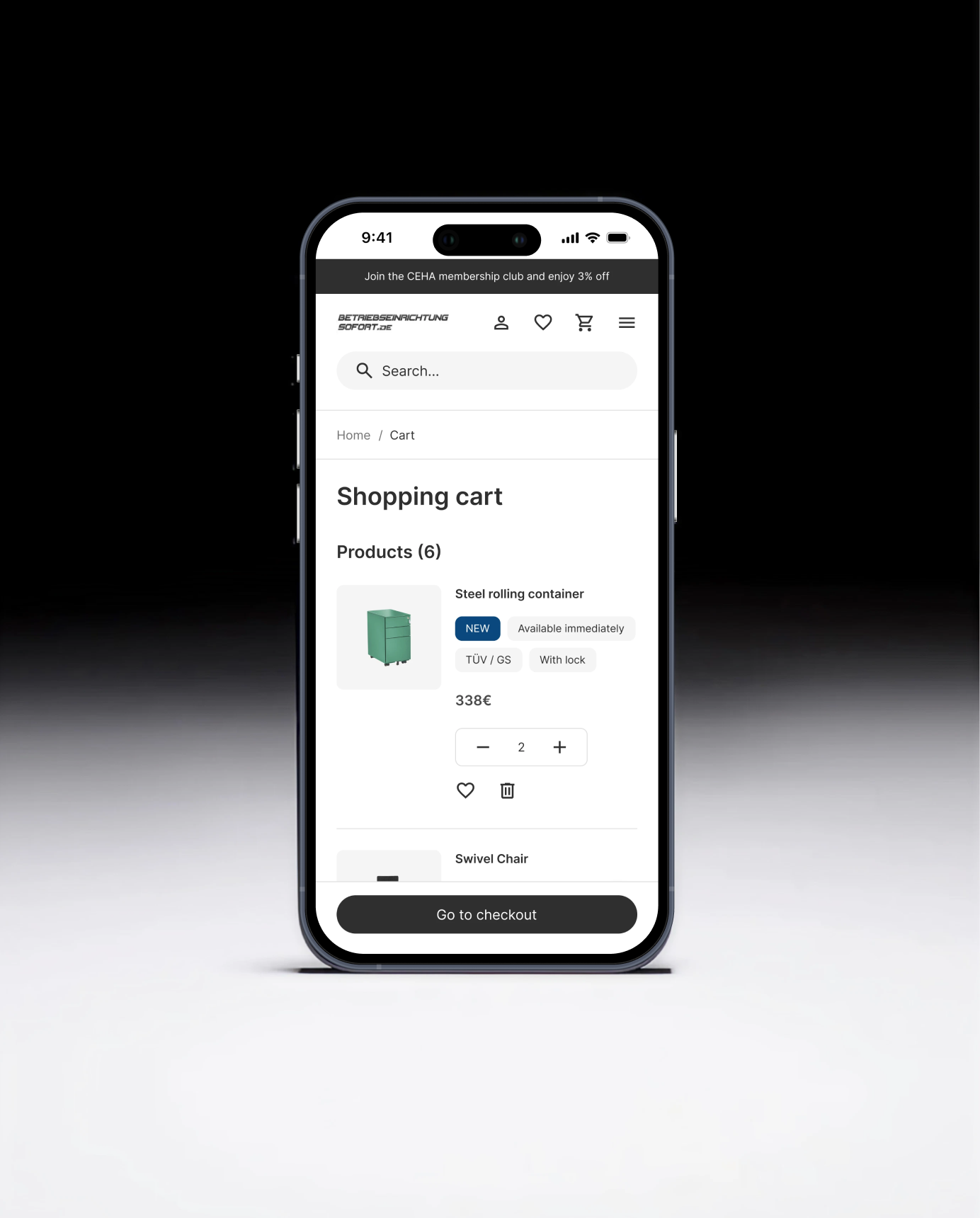
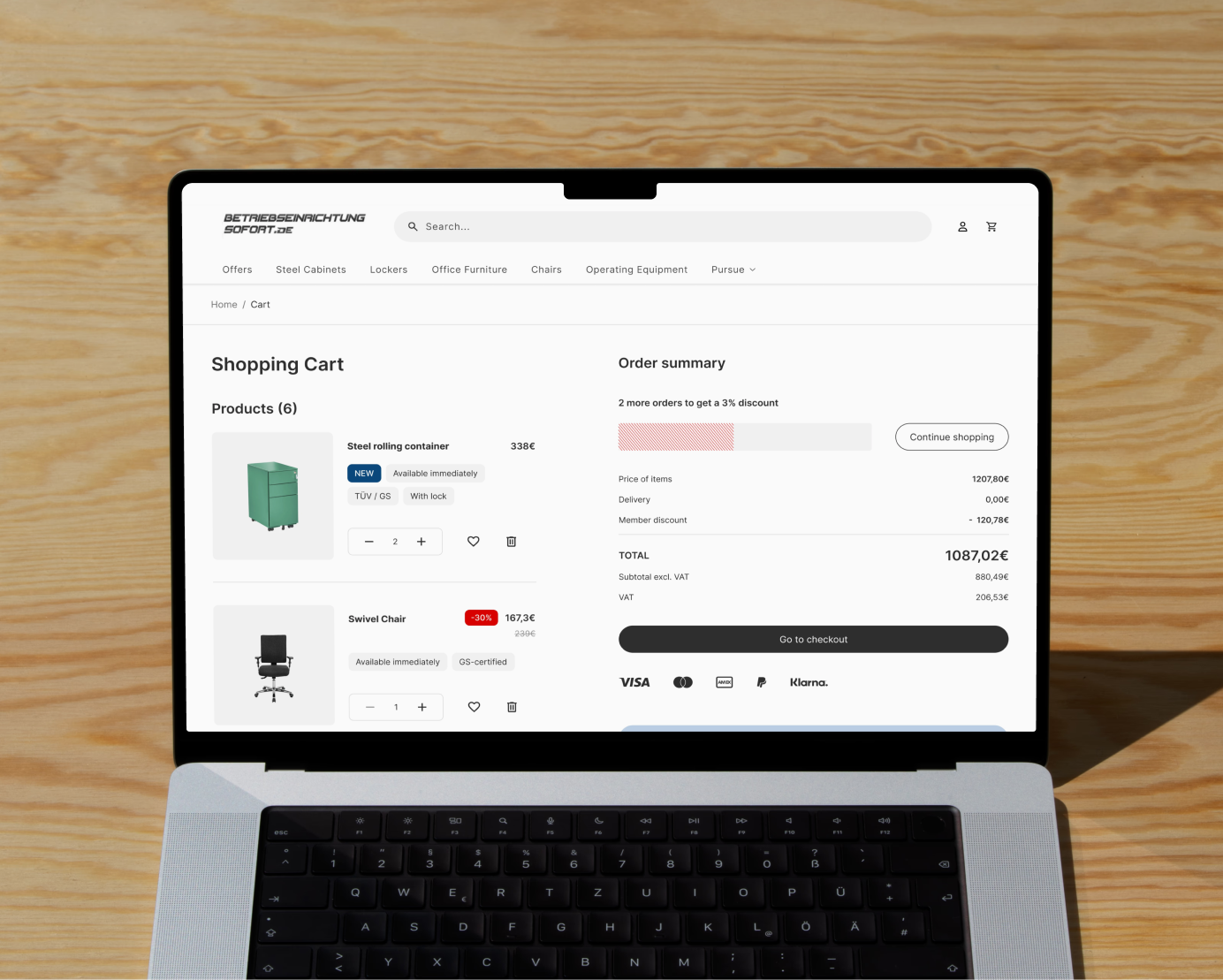
The relaunch gave Betriebseinrichtung-Sofort a stronger and more flexible B2B commerce platform. Shopify Plus now acts as the commerce foundation, while the custom storefront, improved catalogue structure and ERP connector make the shop easier to use, easier to operate and better prepared for future growth.
The project also created a better base for future B2B features such as wishlist and product comparison functionality. More importantly, the new setup gives the team a platform they can continue improving after launch, instead of depending on a rigid system that becomes harder to change over time.


NEW

NEW